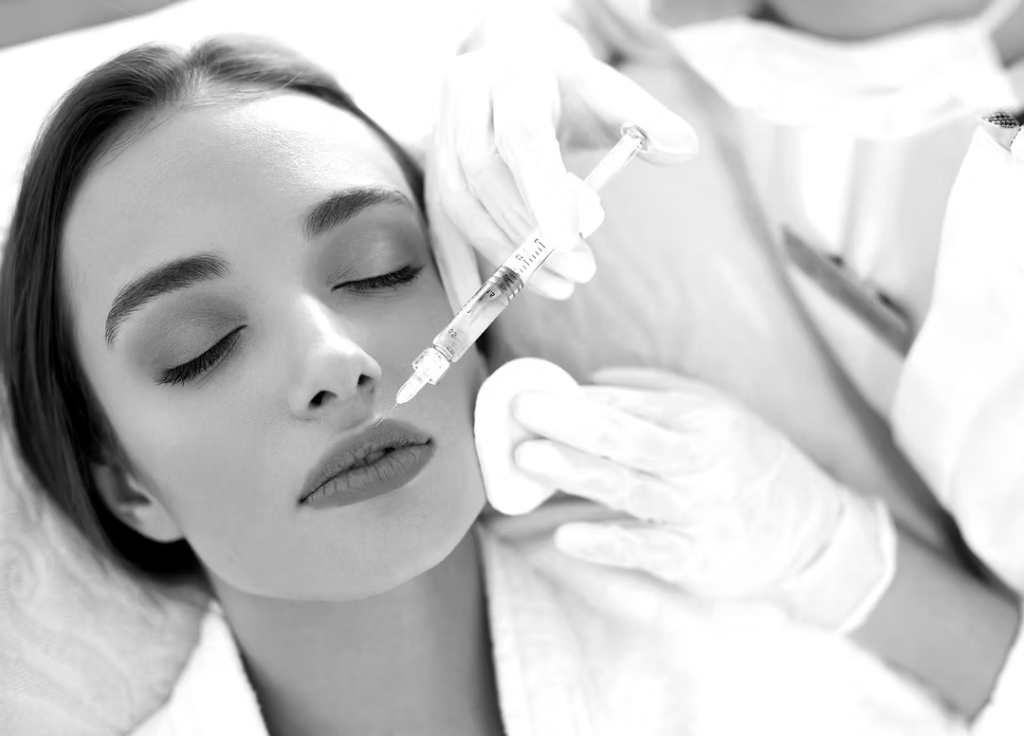


Anti-aging treatments have changed significantly over the past decade. Where facial rejuvenation once focused mainly on reducing wrinkles or restoring lost volume, newer approaches increasingly emphasize skin quality, tissue health, collagen support, and regenerative biology.
One of the most talked-about developments in this space is exosome therapy.
For individuals in Arnprior, as well as nearby Carleton Place and Kanata, exosome-based skin rejuvenation may sound very different from more familiar treatments such as Botox, dermal fillers, chemical peels, and other resurfacing procedures.
That difference is important.
Traditional cosmetic treatments generally target a specific visible problem. Botox reduces muscle activity responsible for dynamic wrinkles. Dermal fillers restore or enhance volume. Chemical peels remove damaged outer layers of skin to improve texture and tone. Exosome therapy, by contrast, is being studied for its potential to influence cell-to-cell communication and regenerative processes within the skin.
However, exosome aesthetics is still an emerging field. The biology is promising, but the evidence base is newer than that of established treatments, and products and treatment protocols are not yet fully standardized. Health Canada has also clarified how certain human-derived exosome and extracellular-vesicle products are classified depending on their composition, purpose, and claims.
This guide compares exosome therapy with traditional anti-aging treatments, explains how regenerative skin rejuvenation differs, and explores what people in Arnprior should understand before deciding which type of treatment best matches their goals.
What Are Exosomes?
Exosomes are microscopic extracellular vesicles released by cells.
They function as biological messengers, carrying materials such as:
- Proteins
- Lipids
- Growth-related signaling molecules
- Messenger RNA
- MicroRNA
These components allow cells to communicate with one another.
Researchers are interested in exosomes because cellular communication plays an important role in processes including:
- Tissue repair
- Inflammation
- Wound healing
- Extracellular matrix remodeling
- Collagen-related activity
A recent systematic review of exosomes for skin rejuvenation identified research across preclinical models, clinical trials, and retrospective studies investigating exosome-based interventions for skin aging, repair, wrinkles, elasticity, and related concerns. The review found encouraging potential while emphasizing the need for more standardized clinical evidence.
What Is Exosome Facial Rejuvenation?
Exosome facial rejuvenation generally refers to the cosmetic use of a preparation containing exosomes or related extracellular vesicles with the goal of improving skin quality.
Depending on the specific formulation and method of use, treatment may be promoted for concerns such as:
- Fine lines
- Dullness
- Loss of elasticity
- Uneven texture
- Visible aging
- Skin recovery
- General skin quality
Importantly, “exosome therapy” is not one standardized treatment.
Different products may come from different biological sources and may differ substantially in:
- Manufacturing
- Purification
- Concentration
- Storage
- Composition
- Regulatory status
That makes product transparency especially important.
Why Is Exosome Therapy Called Regenerative?
Traditional cosmetic procedures often alter an immediate physical cause of aging.
Exosome therapy is different because the underlying concept is based on biological signaling.
Rather than filling an area or relaxing a muscle, exosomes are investigated for their ability to influence cellular behaviour related to repair and tissue remodeling.
This does not mean exosome therapy literally reverses aging.
A more accurate description is that researchers are studying whether exosome-derived signals can support processes involved in healthier skin function.
The systematic review literature describes potential anti-aging mechanisms involving cellular communication, inflammation modulation, extracellular matrix activity, and tissue repair.
How Traditional Anti-Aging Treatments Work
To understand what makes regenerative rejuvenation different, it helps to compare exosomes with established treatment categories.
Botox and Other Neuromodulators
Botulinum toxin treatments temporarily reduce the activity of specific facial muscles.
They are commonly used for:
- Forehead lines
- Frown lines
- Crow’s feet
Botulinum toxin blocks nerve signals that normally cause the targeted muscle to contract. The reduced muscular activity helps soften dynamic wrinkles.
This means Botox treats movement-related wrinkles.
It does not primarily work by repairing skin cells or improving skin texture.
Dermal Fillers
Dermal fillers address a different problem.
They are injectable products designed to restore or add volume.
Common uses include:
- Restoring facial fullness
- Enhancing contours
- Softening deeper folds
- Improving recessed areas
The American Society of Plastic Surgeons describes fillers as useful for restoring facial contours and volume but notes that they do not stop the aging process.
Chemical Peels
Chemical peels improve skin by applying a chemical solution that removes damaged outer layers.
They can be used for:
- Fine lines
- Uneven pigmentation
- Rough texture
- Sun damage
- Some acne scars
The effect depends heavily on peel strength and technique.
Chemical peels therefore focus on controlled resurfacing.
Other Resurfacing Treatments
Laser and mechanical resurfacing treatments also improve skin by creating controlled injury or removing damaged tissue.
The American Society of Plastic Surgeons notes that skin rejuvenation can involve lasers, chemical peels, mechanical resurfacing, injectables, and other modalities depending on whether the concern is wrinkles, pigmentation, scars, vascular changes, loss of tone, or dullness.
Exosomes vs Botox: Which Is Better?
Neither is universally better because they treat different problems.
Botox Is Better Suited To:
- Dynamic forehead lines
- Frown lines
- Crow’s feet
- Wrinkles caused primarily by muscle movement
Exosome Therapy Is More Focused On:
- Skin quality
- Texture
- Regenerative signaling
- Elasticity
- Overall rejuvenation
Someone with strong forehead lines from repeatedly raising their eyebrows may benefit more directly from a neuromodulator.
Someone whose main complaint is tired, thin, dull, or uneven skin may be exploring a different category of treatment altogether.
The correct choice depends on the cause of the visible aging.
Exosomes vs Dermal Fillers
These treatments are also fundamentally different.
Fillers produce structural volume.
Exosome therapy does not function as a conventional filler.
A patient wanting:
- Fuller cheeks
- More defined facial contours
- Correction of significant volume loss
should not expect an exosome treatment to create the same immediate effect as an appropriate volumizing injectable.
Exosomes may be more relevant when the objective is improvement in skin quality rather than shape.
Exosomes vs Chemical Peels
Chemical peels treat the skin by removing damaged surface layers and promoting renewal.
A chemical peel may be especially useful for:
- Surface pigmentation
- Rough texture
- Sun damage
- Certain acne-related concerns
Exosome therapy is biologically different.
It is being explored for its role in cell signaling and regenerative processes rather than simply exfoliating the outer skin.
That means a patient with visible sunspots may require a very different treatment strategy from someone whose primary concern is declining elasticity.
Exosomes vs Traditional Facials
A traditional facial may improve:
- Hydration
- Surface cleansing
- Congestion
- Temporary glow
These treatments work primarily on the skin surface.
Exosome therapy is marketed around deeper biological signaling, although how effectively a specific product reaches its intended target depends on the formulation and delivery method.
That distinction is important when evaluating advertising claims.
Why Collagen Matters in Anti-Aging
Collagen is one of the primary structural proteins in the skin.
It contributes to:
- Firmness
- Thickness
- Elasticity
- Smooth texture
As skin ages, collagen structure and production change.
This contributes to:
- Fine lines
- Reduced firmness
- Thinner skin
- Loss of elasticity
Exosomes are being studied partly because certain extracellular-vesicle signals may influence fibroblast activity and extracellular matrix remodeling.
Research summarized in recent reviews suggests potential for exosome-based interventions to support processes connected to collagen and tissue repair, but the degree of cosmetic improvement varies across studies.
Can Exosomes Make Skin Firmer?
Potentially, but claims need to remain measured.
If exosome signaling supports collagen and extracellular-matrix activity, improved firmness may be biologically plausible.
Some clinical research included in systematic reviews has reported improvements in:
- Elasticity
- Wrinkles
- Texture
- Skin quality
However, there is not yet enough standardized evidence to guarantee that every patient will achieve visibly tighter skin.
Someone with significant skin laxity may require a different treatment strategy.
Can Exosomes Reduce Wrinkles?
Exosome therapy may potentially improve some superficial signs of aging, particularly when wrinkle appearance is influenced by declining skin quality.
However, wrinkles have many causes.
Expression Wrinkles
Primarily caused by muscle activity.
Neuromodulators may be more directly effective.
Static Wrinkles
Influenced by:
- Collagen loss
- Sun damage
- Skin thinning
- Volume changes
Regenerative treatments may potentially play a role, but results vary.
This is why patients should avoid comparing exosome therapy directly with Botox based only on the word “wrinkles.”
Can Exosomes Improve Skin Texture?
Texture is one of the more logical concerns to investigate with regenerative skin therapy.
Uneven texture can result from:
- Aging
- Sun exposure
- Inflammation
- Slower skin renewal
- Collagen changes
Studies included in recent exosome reviews have evaluated texture and overall skin rejuvenation with encouraging early findings. However, research remains heterogeneous, meaning products, methods, and outcome measurements differ across studies.
What About Skin Glow?
“Glow” is not a precise medical outcome.
People generally use the term to describe skin that appears:
- Brighter
- More hydrated
- Smoother
- More even
- Healthier
Improvement in texture or skin quality may make the complexion appear more radiant.
However, exosome therapy should not be marketed as an instant or guaranteed glow treatment.
How Quickly Do Exosome Results Appear?
There is no universal timeline.
If a treatment is genuinely acting through regenerative processes, meaningful changes would generally be expected to develop gradually rather than instantly.
Depending on the treatment and skin condition, people may report changes over:
- Several weeks
- Several months
Unlike filler, exosome treatment does not normally aim to produce immediate structural volume.
Unlike Botox, there is no established universal onset timeline comparable to the predictable neuromodulator response.
How Long Do Results Last?
This is another area where definitive claims should be avoided.
There is not yet enough standardized evidence to say that cosmetic exosome results universally last:
- Six months
- One year
- Several years
Longevity can potentially depend on:
- Product used
- Number of treatments
- Skin condition
- Age
- Lifestyle
- Sun exposure
- Individual biology
The American Society of Plastic Surgeons notes more generally that skin rejuvenation results vary depending on the technology or treatment and that natural aging continues after treatment.
The same principle applies particularly strongly to emerging regenerative therapies.
How Many Exosome Treatments Are Needed?
There is no universally accepted treatment schedule.
Treatment recommendations may vary according to:
- Product formulation
- Skin concern
- Treatment goal
- Provider protocol
- Patient response
Some aesthetic programs use multiple sessions, while others may use exosome products less frequently.
Patients should ask why a particular schedule is being recommended.
Is Exosome Therapy Safer Because It Is “Natural”?
Not automatically.
The word natural is often used too loosely in aesthetic marketing.
Exosomes may originate from biological materials, but that does not mean every exosome product has the same safety profile.
Health Canada specifically warns that products containing human-derived exosomes, extracellular vesicles, or human cell-conditioned media can present risks including potential toxic effects, unsubstantiated therapeutic claims, and risks associated with materials of human origin such as transmission of infectious agents.
Product sourcing and manufacturing quality therefore matter substantially.
Exosome Regulation in Canada
This is particularly important for patients in Arnprior and elsewhere in Ontario.
Health Canada’s final 2026 notice explains that topical products containing human-derived exosomes, extracellular vesicles, or conditioned media may be regulated as either cosmetics or drugs depending on their function, purpose, and representations. Products represented as treating or modifying bodily functions can fall under drug classification.
Patients should therefore ask:
- What product is being used?
- Where does it come from?
- What does the manufacturer claim it does?
- What Canadian regulatory category applies?
- How is it stored and handled?
- What evidence supports its use?
Transparency should be expected.
Are Exosomes the Same as Stem Cells?
No.
Exosomes are not stem cells.
They are extracellular vesicles released by cells.
This distinction matters because phrases such as “stem cell facial” can create inaccurate expectations.
An exosome product does not transplant new stem cells into the skin simply because the exosomes may have originated from cultured cells.
Exosome Therapy vs PRP
PRP, or Platelet Rich Plasma, is another regenerative aesthetic treatment.
PRP uses components derived from the patient’s own blood.
Exosome preparations generally come from externally manufactured biological sources.
PRP
Works primarily through platelet-derived growth factors and the body’s wound-healing pathways.
Exosomes
Focus on extracellular signaling carried between cells.
Both are regenerative concepts, but neither should automatically be declared superior.
PRP has a longer clinical history, while exosome aesthetics is a newer field.
Which Treatment Produces More Natural-Looking Results?
“Natural-looking” depends more on the treatment goal than on the product.
Botox can look natural when appropriately dosed.
Fillers can look natural when used conservatively.
Chemical peels can create natural improvement because they enhance the existing skin.
Exosome therapy also aims for gradual skin-quality improvement rather than dramatic facial transformation.
Therefore, the deciding factor should not simply be whether a treatment is described as regenerative.
It should be whether it appropriately addresses the patient’s specific concern.
Traditional Treatments Can Be More Predictable
One advantage of established anti-aging procedures is predictability.
For example:
Botox
Mayo Clinic notes that results generally begin within approximately a week and typically last a few months.
Dermal Fillers
Provide immediate volume changes in many applications.
Chemical Peels
Have well-established treatment depths and recovery patterns, although outcomes vary with strength and technique.
Exosome therapy currently has less standardization.
This does not make it ineffective, but patients should understand that uncertainty is greater.
Why Regenerative Aesthetics Is Still Exciting
Despite those limitations, exosome research is genuinely interesting.
Researchers are investigating how extracellular vesicles influence:
- Fibroblast behaviour
- Tissue repair
- Inflammation
- Extracellular matrix remodeling
- Cell communication
These mechanisms may eventually allow aesthetic medicine to focus more directly on skin biology rather than only correcting the visible consequences of aging.
That potential is what makes exosome therapy different from many traditional treatments.
Who May Be Interested in Exosome Facial Rejuvenation?
Exosome therapy may appeal to adults who:
- Want gradual skin rejuvenation
- Are interested in regenerative aesthetics
- Want to improve skin quality
- Are concerned about fine lines
- Want better texture or elasticity
- Prefer subtle changes
- Understand the evidence is still evolving
Suitability should be established through professional assessment.
When Might a Traditional Treatment Be Better?
Exosomes are not automatically the best option simply because they are newer.
Forehead Wrinkles
A neuromodulator may be more direct if muscle movement is the main cause.
Significant Volume Loss
Dermal filler or another structural approach may be more appropriate.
Surface Pigmentation
Chemical peels or other pigment-directed treatments may provide a more targeted option.
Deep Scars
Resurfacing procedures may be needed.
Significant Laxity
A stronger skin-tightening or surgical approach may be necessary.
The treatment should follow the diagnosis.
Can Treatments Be Combined?
Potentially.
Modern facial rejuvenation often involves treating different layers or mechanisms separately.
For example:
- Neuromodulators for movement-related wrinkles
- Fillers for structural volume
- Peels for surface texture
- Regenerative therapies for skin quality
The American Society of Plastic Surgeons notes that combination approaches are commonly used in skin rejuvenation because different treatments address different aspects of aging.
Combination treatment should still be individualized.
Questions to Ask Before Choosing Exosome Therapy
Patients considering exosome therapy in Arnprior should ask detailed questions.
Useful topics include:
- What specific exosome product is used?
- Is the product human-derived, plant-derived, or from another source?
- Is it actually an exosome product?
- What evidence supports this exact formulation?
- How is it manufactured?
- How is it stored?
- What regulatory status does it have in Canada?
- What results are realistic?
- What side effects are possible?
- How many treatments are recommended?
- What alternatives are available?
A provider should be comfortable answering these questions clearly.
Marketing Claims to Approach Carefully
Consumers should be cautious when exosome treatment is promoted as:
- Reversing aging
- Creating new skin
- Permanently rebuilding collagen
- Acting like stem-cell therapy
- Producing guaranteed results
- Replacing every other cosmetic procedure
Current research does not justify those kinds of absolute claims.
The evidence is promising, not definitive.
Exosome Therapy in Arnprior and Surrounding Areas
For local patients searching terms such as:
Exosome therapy Arnprior
Exosomes near me
Exosome facial near Arnprior
Anti-aging treatments Arnprior
Regenerative skin rejuvenation
the most useful question is not simply which clinic offers the newest procedure.
The more important questions are:
- What is actually being treated?
- Is the proposed treatment supported by evidence?
- Is the product appropriate and properly regulated?
- Are the expectations realistic?
Residents from nearby Carleton Place and Kanata should use the same criteria.
Frequently Asked Questions
What makes exosome therapy different from Botox?
Botox temporarily relaxes muscles responsible for dynamic wrinkles. Exosome therapy is being studied for its effects on cellular communication, tissue repair, and skin quality.
Are exosomes better than Botox?
Not necessarily. They address different concerns.
Are exosomes better than fillers?
They are not directly comparable. Fillers restore volume, while exosome treatments focus more on regenerative signaling and skin quality.
Can exosomes tighten skin?
Research suggests potential effects on collagen-related and regenerative pathways, but significant skin tightening should not be guaranteed.
Can exosomes remove wrinkles?
They may potentially improve some fine lines or skin-quality changes, but dynamic wrinkles may respond more directly to neuromodulators.
Are exosomes stem cells?
No. Exosomes are extracellular vesicles, not cells.
How long do results last?
There is no universally established duration for cosmetic exosome therapy.
How many treatments are needed?
Protocols vary considerably. Treatment frequency should be based on the product, skin concerns, and professional assessment.
Are exosomes safe?
Safety depends heavily on product quality, sourcing, manufacturing, and method of use. Health Canada notes potential risks associated with human-derived exosome and extracellular-vesicle products.
Are exosome products regulated in Canada?
Yes, but classification depends on the product’s composition, purpose, and claims. Health Canada’s 2026 guidance explains how certain topical human-derived exosome products may be classified as cosmetics or drugs.
Which anti-aging treatment is best?
There is no single best treatment. The right approach depends on whether the concern is muscle movement, volume loss, pigmentation, surface damage, skin quality, or another aspect of aging.
Final Thoughts: What Makes Regenerative Skin Rejuvenation Different?
Exosome therapy represents a different philosophy of facial rejuvenation.
Traditional cosmetic treatments typically target a clearly defined physical problem.
Botox reduces excessive muscle movement.
Fillers restore volume.
Chemical peels resurface damaged skin.
Exosome therapy is being explored for something different: influencing the biological communication involved in skin repair, tissue remodeling, and regeneration.
That makes regenerative aesthetics exciting, but it also requires careful expectations.
Exosome treatment does not make established procedures obsolete. In fact, the future of aesthetic medicine may increasingly involve selecting different treatments for different layers of aging rather than expecting one procedure to solve every concern.
For people in Arnprior, with nearby Carleton Place and Kanata naturally forming part of the surrounding service area, the strongest approach begins with identifying the actual problem.
Someone with dynamic wrinkles may benefit from a neuromodulator. Someone with volume loss may need a structural treatment. Someone with surface pigmentation may benefit from resurfacing. Someone primarily concerned with skin quality may be more interested in regenerative options.
Exosome therapy may ultimately become an increasingly important part of that toolkit. Current research is encouraging, particularly around cellular signaling and skin regeneration, but more standardized human trials are still needed before broad claims can be made.
The best anti-aging treatment is therefore not necessarily the newest one.
It is the one that matches the individual’s anatomy, skin concerns, goals, medical history, and tolerance for risk while being supported by transparent information and realistic expectations.