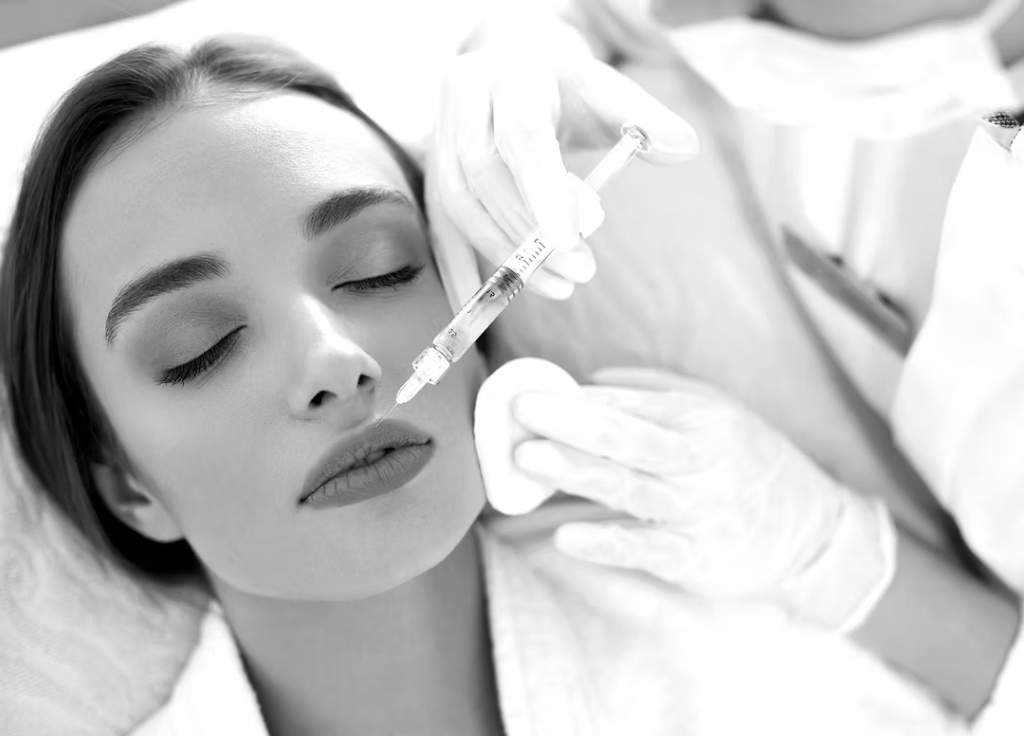


If you have been researching treatments for healthier, more youthful-looking skin, you may have come across two similar terms: PRP and PRF.
Both treatments use components obtained from your own blood and are commonly discussed within regenerative aesthetics. Both may be incorporated into treatment plans designed to support skin rejuvenation. And because their names sound so similar, it is easy to assume they are essentially the same treatment.
They aren’t.
Platelet-rich plasma (PRP) and platelet-rich fibrin (PRF) differ in how the blood is processed, the resulting preparation, and how they may be used in aesthetic treatments.
So, is PRF better than PRP? What does each treatment actually do? And which one might make more sense for your skin?
Here is what you should know.
What Is PRP?
PRP stands for platelet-rich plasma.
The treatment begins with a small amount of your own blood, usually drawn from your arm. That blood is placed into a centrifuge, where spinning helps separate different components of the blood.
The objective is to produce a plasma preparation containing a concentration of platelets.
Platelets are best known for their role in blood clotting, but they also contain proteins and signaling molecules involved in normal healing processes. This biological activity is one reason PRP has attracted interest in both medical and aesthetic applications.
In aesthetic medicine, PRP may be used as part of a treatment strategy for skin rejuvenation and certain hair-related concerns, depending on individual suitability and the provider’s clinical approach.
Because the preparation originates from the patient’s own blood, PRP is considered an autologous treatment.
What Is PRF?
PRF stands for platelet-rich fibrin.
Like PRP, PRF begins with a blood draw and uses centrifugation to separate useful components of the patient’s blood.
However, the preparation process is different.
PRF protocols generally aim to create a fibrin-rich matrix containing platelets and other cellular components. Fibrin is a protein involved in the body’s normal clotting and wound-healing processes.
This fibrin network is one of the defining characteristics that separates PRF from conventional PRP preparations.
PRF has consequently become increasingly popular within regenerative aesthetics, where practitioners may use it for selected facial rejuvenation and other applications.
PRP vs. PRF: What’s the Main Difference?
The easiest way to understand the difference is that both treatments start with your blood, but they don’t produce exactly the same end product.
PRP primarily creates a platelet-rich plasma preparation.
PRF creates a preparation in which platelets and other components are incorporated into a fibrin matrix.
Their centrifugation protocols may also differ, including factors such as processing speed, duration, collection method, and equipment.
These differences influence the characteristics of the final preparation.
It is important to recognize that neither PRP nor PRF is a single universally standardized product. Preparation protocols can vary between systems and providers, which makes broad claims such as “PRF is always better than PRP” difficult to justify.
How Do PRP and PRF Support Skin Rejuvenation?
The interest in PRP and PRF largely comes from the biological role of platelets and the signaling molecules associated with them.
When tissue is injured, the body initiates a complex healing response involving many different cells, proteins, and signaling pathways.
Platelets participate in this process.
By concentrating or organizing certain blood components and introducing them in a controlled aesthetic setting, PRP and PRF treatments aim to take advantage of aspects of the body’s own healing biology.
In skin rejuvenation, the objective may include supporting processes associated with tissue repair, collagen remodeling, and overall skin quality.
However, these treatments should not be described as literally reversing aging or creating completely new skin.
Visible aging is influenced by many factors, and individual responses to regenerative treatments vary.
What Are Growth Factors?
You will frequently hear the phrase “growth factors” when researching PRP and PRF.
Growth factors are signaling proteins involved in communication between cells. Different growth factors participate in processes such as wound healing, tissue repair, blood vessel formation, and cellular activity.
Platelets contain several biologically active signaling molecules.
This is part of the rationale behind concentrating platelets for regenerative applications.
However, more growth factors do not automatically mean better cosmetic results. Treatment outcomes depend on many variables, including the preparation method, treatment technique, patient’s biology, condition being addressed, and overall treatment plan.
Why Is Fibrin Important in PRF?
One of PRF’s defining characteristics is its fibrin matrix.
Fibrin plays an important role in the body’s natural healing process. When blood coagulates, fibrin contributes to the structural network of a clot.
In PRF preparations, this fibrin network can act as a matrix containing platelets and other cellular components.
This characteristic has contributed to interest in PRF within regenerative medicine and aesthetics.
You may see claims online that PRF automatically provides dramatically longer or better growth-factor release than PRP. While differences in release patterns and preparation characteristics are areas of scientific interest, consumers should be cautious about turning laboratory findings into guaranteed cosmetic outcomes.
The clinically important question isn’t simply which preparation sounds more advanced.
It is which treatment is appropriate for the individual patient and the specific concern being treated.
What Skin Concerns May PRP Be Used For?
PRP may be incorporated into aesthetic treatment plans for people seeking improvements in overall skin quality and rejuvenation.
Depending on the individual and treatment protocol, it may be considered when addressing concerns such as:
- Fine lines
- Uneven-looking texture
- Dull-looking skin
- Certain signs of skin aging
- Overall skin quality
- Selected hair and scalp concerns
PRP may also be combined with another procedure, such as microneedling, in certain treatment plans.
That doesn’t mean PRP is appropriate for every concern.
For example, significant facial volume loss, certain pigmentation concerns, active skin disease, or deeper structural changes may require a completely different treatment strategy.
What Skin Concerns May PRF Be Used For?
PRF is also used within regenerative aesthetic treatment plans, but its physical characteristics can make it attractive for somewhat different applications depending on the preparation.
Practitioners may consider PRF when addressing concerns related to:
- Overall skin quality
- Fine lines
- Facial rejuvenation
- Certain delicate facial areas
- Age-related skin changes
- Selected hair restoration applications
The exact type of PRF matters as well.
PRF can be prepared in different forms and consistencies depending on the technique and intended application. This is another reason why simply asking whether a clinic “offers PRF” doesn’t tell you everything about the treatment.
PRF vs. PRP for Under-Eye Rejuvenation
The under-eye area is one reason PRF has received considerable attention in aesthetics.
Skin around the eyes is relatively thin, and concerns in this area can result from several different causes.
Dark-looking under-eyes, for example, may be influenced by pigmentation, visible blood vessels, shadowing from facial anatomy, volume changes, skin thickness, genetics, or a combination of factors.
Fine lines and skin quality represent another set of concerns.
PRF may be considered by some practitioners as part of an under-eye rejuvenation strategy because of its biological and physical characteristics.
However, PRF is not automatically the correct treatment for every under-eye concern.
Someone whose primary issue is pigmentation may need a different approach from someone experiencing structural hollowing or changes in skin quality.
A proper assessment is therefore particularly important before treating this delicate area.
PRP and PRF With Microneedling
PRP and PRF are also discussed in connection with microneedling.
Microneedling creates controlled microchannels in the skin using fine needles. This controlled injury initiates a wound-healing response and processes associated with collagen remodeling.
In some clinical approaches, an autologous preparation may be incorporated into the treatment.
This creates two different regenerative mechanisms within the overall procedure: the controlled stimulation produced by microneedling and the biological components contained within the blood-derived preparation.
Whether a combination treatment makes sense depends on the patient’s goals, skin condition, and the specific protocol being used.
More treatments at once do not necessarily produce better results.
PRF vs. PRP for Hair Restoration
PRP is also widely discussed in connection with hair restoration, and PRF has increasingly attracted attention in this area.
The principle is similar: blood-derived preparations containing platelets and associated signaling molecules are introduced into selected areas of the scalp as part of a treatment strategy.
Hair loss, however, is particularly complex.
Genetics, hormones, nutritional deficiencies, medications, stress, illness, autoimmune conditions, and other factors can contribute to thinning hair.
For that reason, a regenerative treatment should not automatically be assumed to be appropriate for every form of hair loss.
Identifying the underlying cause is an important part of deciding whether PRP, PRF, another therapy, or further medical assessment should be considered.
Does PRF Contain More Platelets Than PRP?
This is another area where online comparisons can become misleading.
The concentration of platelets and other blood components depends significantly on how the preparation is produced.
Different centrifuges, collection tubes, protocols, spin speeds, processing times, and systems can produce preparations with different characteristics.
As a result, saying that every PRF preparation contains more platelets than every PRP preparation—or vice versa—is overly simplistic.
The label on the treatment matters less than the quality of the preparation and how appropriately it is being used.
Is PRF More “Natural” Than PRP?
Both PRP and PRF originate from the patient’s own blood.
You will sometimes see PRF promoted as a more natural alternative because certain PRF protocols may avoid additives used in some PRP preparation methods.
But “natural” is not a particularly useful measure of whether an aesthetic treatment is appropriate, effective, or safe.
Both are medical or aesthetic procedures involving blood collection, processing, and administration.
The more useful questions are:
What is being prepared? Why is it being used? What evidence supports that application? And is it appropriate for you?
What Is Treatment Like?
Although exact protocols vary, both treatments typically begin with a blood draw.
The blood is then processed in a centrifuge according to the selected PRP or PRF protocol.
The resulting preparation is collected and used in the treatment area according to the practitioner’s technique.
Because the preparation needs to be created from freshly collected blood, processing and treatment generally occur during the same appointment.
The experience will vary depending on the area being treated and whether the blood-derived preparation is being injected, combined with another procedure, or used in another clinically appropriate manner.
Is There Downtime After PRP or PRF?
Downtime depends on how the treatment is performed and which area is treated.
Temporary effects can include:
- Redness
- Swelling
- Tenderness
- Bruising
- Mild discomfort
- Temporary sensitivity
If PRP or PRF is combined with another procedure such as microneedling, the recovery experience may also reflect that treatment.
Your provider should explain expected downtime, aftercare, and warning signs before treatment.
When Will I See Results?
PRP and PRF are not usually treatments where the final outcome can be evaluated immediately.
The biological processes these treatments aim to support occur over time.
Some people may notice gradual changes in the appearance or quality of their skin over the following weeks or months, depending on the treatment and individual response.
A series of treatments may also be recommended in some circumstances.
The timeline varies based on factors such as:
- Age
- Baseline skin condition
- Treatment area
- Preparation technique
- Number of treatments
- Overall health
- Lifestyle
- Individual healing response
Results should therefore be discussed as a range of possibilities rather than a guarantee.
How Many PRP or PRF Treatments Do You Need?
There isn’t one correct number for everyone.
Some treatment plans may involve multiple initial sessions followed by reassessment, while others may use a different schedule.
Your treatment frequency should be based on the concern being addressed and your individual response—not simply a predetermined package.
This is particularly important with regenerative aesthetics because biological responses differ from person to person.
Are PRP and PRF Safe?
Because PRP and PRF use material derived from the patient’s own blood, they have certain advantages compared with treatments involving some externally manufactured materials.
That does not make them completely risk-free.
Potential risks can include pain, bruising, swelling, infection, bleeding, inflammatory reactions, and complications related to injection or treatment technique.
There may also be circumstances in which a blood-derived treatment is not appropriate.
Medical history, medications, blood-related conditions, active infections, pregnancy, and other factors may influence candidacy.
This is why appropriate screening and professional treatment are important.
So, Is PRF Better Than PRP?
This is probably the biggest question—and unfortunately, the internet loves giving it an overly simple answer.
PRF isn’t automatically better than PRP, and PRP isn’t automatically better than PRF.
They are different preparations with different characteristics.
The appropriate choice depends on factors such as:
- What you want to treat
- The treatment area
- Your skin condition
- Your medical history
- The desired characteristics of the preparation
- Whether another procedure is being combined with it
- The provider’s treatment protocol
The best treatment isn’t necessarily the newest one.
It is the one with a sensible clinical rationale for your particular concern.
PRF vs. PRP at a Glance
| PRP | PRF | |
|---|---|---|
| Full name | Platelet-Rich Plasma | Platelet-Rich Fibrin |
| Source | Patient’s own blood | Patient’s own blood |
| Main characteristic | Platelet-rich plasma preparation | Fibrin-based preparation containing platelets and other components |
| Processing | Centrifugation | Centrifugation using a different protocol |
| Fibrin matrix | Not the defining feature | Key characteristic |
| Skin rejuvenation use | Yes, depending on suitability | Yes, depending on suitability |
| Hair applications | May be considered | May be considered |
| Microneedling combinations | May be used in some protocols | May be used in some protocols |
| Best choice | Depends on the patient and concern | Depends on the patient and concern |
Choosing Between PRP and PRF for Skin Rejuvenation
If you are considering regenerative aesthetics, it is easy to become focused on choosing between two acronyms.
But there is a more important question:
What is causing the concern you want to improve?
Fine lines, pigmentation, facial volume changes, skin laxity, uneven texture, under-eye darkness, and hair thinning do not necessarily have the same cause.
And they should not automatically receive the same treatment.
A thoughtful consultation begins by identifying the concern and then deciding whether PRP, PRF, microneedling, another aesthetic treatment, or a combination approach makes sense.
That is much more useful than choosing PRF simply because it is newer or PRP simply because it is better known.
PRP & PRF Skin Rejuvenation at Rejovenation
At Rejovenation in Stittsville, regenerative aesthetics is approached with individualized treatment planning.
Rather than assuming that one treatment is appropriate for everyone, a consultation provides an opportunity to evaluate your concerns, goals, relevant health history, and available treatment options.
Depending on your needs and suitability, your plan may explore PRP, PRF, skin rejuvenation, microneedling, regenerative approaches, injectables, or other aesthetic treatments.
Rejovenation is located in Stittsville and welcomes clients from Kanata, Nepean, Barrhaven, Ottawa, and surrounding communities.
Frequently Asked Questions About PRP vs. PRF
What’s the biggest difference between PRP and PRF?
Both are produced from a patient’s own blood, but their preparation differs. PRP produces a platelet-rich plasma preparation, while PRF incorporates platelets and other components into a fibrin-based matrix.
Is PRF newer than PRP?
PRF has become increasingly visible within aesthetics in recent years, while PRP has been widely used and studied across multiple applications for longer. Newer, however, does not automatically mean better.
Is PRF better than PRP for the face?
Not universally. The most appropriate preparation depends on the treatment area, concern, desired treatment characteristics, individual patient, and protocol being used.
Is PRF better for under-eyes?
PRF may be considered by some practitioners for selected under-eye concerns, but the cause of the concern needs to be assessed first. Pigmentation, hollowing, visible vessels, skin quality, and facial anatomy can all contribute to the appearance of the under-eye area.
Can PRP and PRF stimulate collagen?
PRP and PRF contain biological components involved in normal tissue-repair processes and are used in regenerative approaches intended to support skin rejuvenation. The extent of an individual’s response varies.
Are PRP and PRF fillers?
They should not simply be treated as equivalents to conventional dermal fillers. Dermal fillers are designed to provide specific structural or volumizing effects depending on the product. PRP and PRF are blood-derived regenerative preparations with different characteristics and treatment objectives.
How long do PRP and PRF results last?
There is no universal duration. Outcomes and longevity vary according to the treatment, area, preparation, number of sessions, individual biology, lifestyle, and other factors.
Where can I learn more about PRP and PRF near Ottawa?
Rejovenation is located at 1563 Stittsville Main Street in Stittsville, Ontario, serving clients from Stittsville, Kanata, Nepean, Barrhaven, Ottawa, and nearby communities. A consultation can help determine whether PRP, PRF, or another skin rejuvenation approach may be appropriate for your goals.
Which Regenerative Treatment Is Right for You?
PRP and PRF share the same starting point—your own blood—but they are distinct preparations with different characteristics.
Rather than thinking of the decision as PRF versus PRP, it is more useful to think about what you want to accomplish and which treatment has the strongest rationale for that goal.
If you’re considering regenerative skin rejuvenation, book a consultation with Rejovenation in Stittsville to discuss your concerns and explore which options may be suitable for you.