

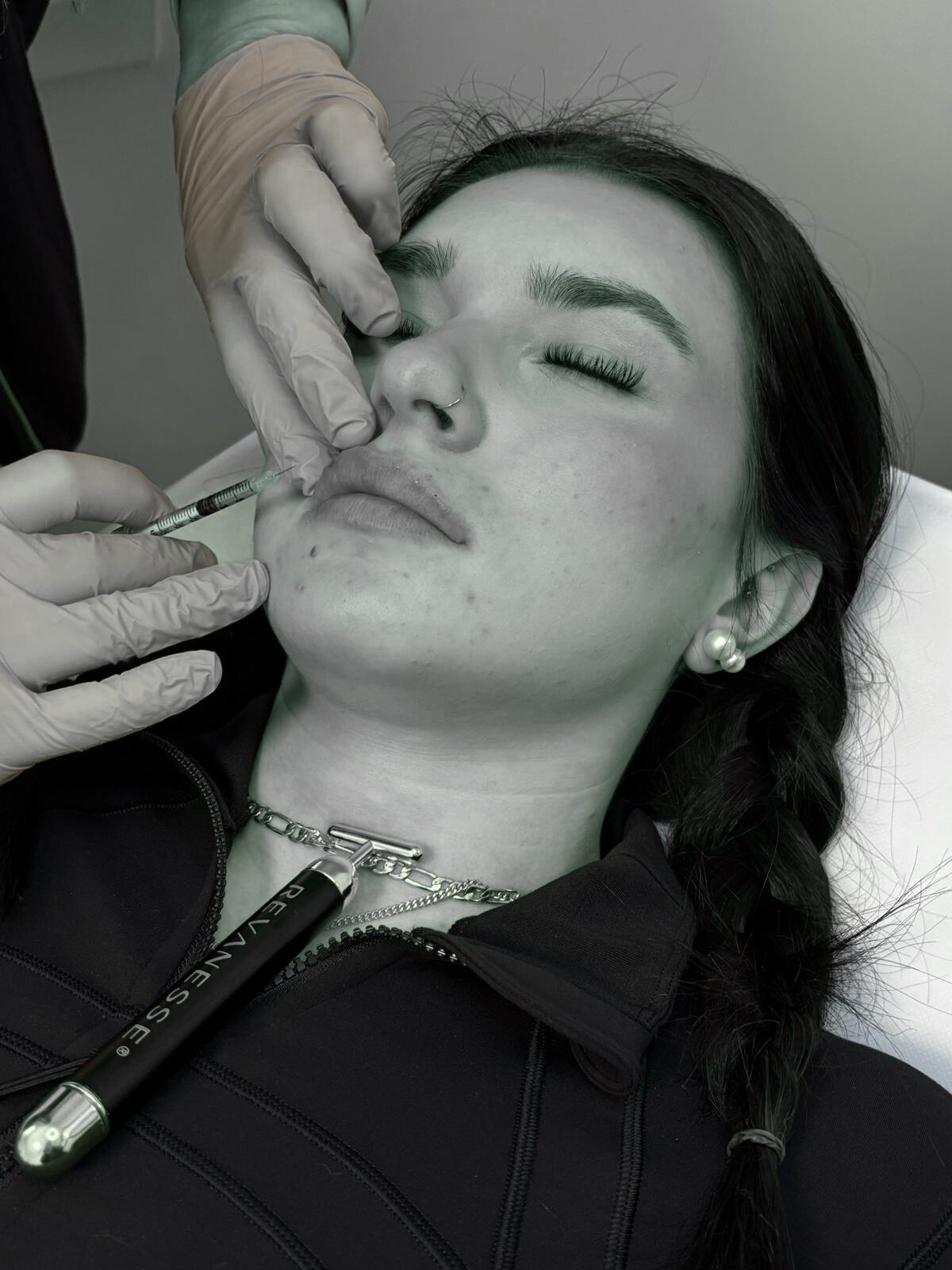
Fine lines and wrinkles are a natural part of aging, but not everyone develops them at the same age. Some adults begin noticing faint forehead lines in their twenties, while others reach their forties without significant expression wrinkles.
For residents of Barrhaven, Nepean, Kanata, Manotick, and surrounding Ottawa communities, preventative Botox has become a frequently discussed option for managing the earliest visible signs of facial aging.
Rather than waiting until wrinkles become deeply established, some adults consider neuromodulator injections when fine lines first begin appearing during facial expressions.
But does starting Botox early actually prevent wrinkles? Is there an ideal age to begin treatment? And can preventative Botox help maintain natural-looking skin without creating an overly frozen appearance?
The answers depend on individual facial anatomy, muscle activity, skin condition, and personal treatment goals.
Although Botox is an established treatment for certain expression-related wrinkles, its long-term ability to prevent future wrinkles is still being studied.
This guide explains preventative Botox in Barrhaven, including how neuromodulators work, when treatment may be appropriate, which wrinkles respond best, what results to expect, how frequently injections may be needed, and why starting younger is not automatically better.
What Is Preventative Botox?
Preventative Botox refers to the use of botulinum toxin injections before expression lines become deeply established in the skin.
Traditional cosmetic Botox treatments often focus on reducing wrinkles that are already noticeable.
Preventative treatment takes a somewhat different approach.
The objective is to temporarily reduce repetitive muscle contractions that contribute to the formation of certain facial lines.
For example, someone may notice faint horizontal forehead lines whenever they raise their eyebrows.
At first, these lines disappear completely when the face relaxes.
Over time, repeated folding combined with age-related skin changes may cause the lines to remain visible even without movement.
Preventative Botox aims to reduce some of that repetitive folding.
However, it does not stop biological aging or guarantee that permanent wrinkles will never develop.
How Does Botox Work?
Botox Cosmetic contains onabotulinumtoxinA, a prescription medication derived from botulinum toxin type A.
It belongs to a group of medications called neuromodulators.
Neuromodulators temporarily interfere with the nerve signals that cause targeted muscles to contract.
When carefully injected into selected facial muscles, they reduce movement responsible for certain expression lines.
Common treatment areas include:
- Horizontal forehead lines
- Frown lines between the eyebrows
- Crow’s feet around the eyes
By reducing muscle contraction, Botox can soften wrinkles that appear during facial expressions.
The effects are temporary, usually lasting approximately three to four months.
What Is the Difference Between Preventative Botox and Regular Botox?
The medication itself is not different.
The distinction involves the treatment goal and timing.
Traditional Botox
Traditional cosmetic treatment often focuses on reducing established expression wrinkles.
A patient may already have visible forehead lines or pronounced frown lines.
Preventative Botox
Preventative treatment is considered when expression lines are still relatively mild or are beginning to linger after facial movement.
The objective is to reduce repetitive folding before lines become more deeply etched.
Both approaches use neuromodulators.
Both require professional assessment.
Neither permanently stops the aging process.
What Causes Early Facial Wrinkles?
Wrinkle formation involves several biological and environmental factors.
Repeated Facial Expressions
Smiling, frowning, squinting, and raising the eyebrows repeatedly fold the skin.
Collagen Changes
Collagen contributes to skin strength and firmness.
Age-related changes in collagen can make expression lines more persistent.
Reduced Skin Elasticity
As skin loses elasticity, it becomes less able to return completely to its original position after movement.
Sun Exposure
Ultraviolet radiation accelerates certain signs of skin aging.
Genetics
Some individuals naturally develop wrinkles earlier because of inherited differences in skin structure and facial anatomy.
Lifestyle Factors
Smoking and other environmental exposures can contribute to premature skin aging.
Preventative Botox addresses only part of this process: muscle-related facial movement.
It does not correct every cause of wrinkles.
What Is the Best Age to Start Preventative Botox?
There is no universally recommended age to begin Botox.
Some adults explore treatment in their late twenties or thirties.
Others do not consider it until their forties or later.
Many never need or want cosmetic injections.
The appearance and persistence of expression lines matter more than a person’s age alone.
A qualified injector should assess whether treatment would provide a meaningful benefit.
Preventative Botox in Your Early Twenties
Some people become interested in Botox shortly after reaching adulthood.
However, having no visible wrinkles is not, by itself, a reason to begin injections.
There is insufficient evidence that routinely treating wrinkle-free young adults produces meaningful long-term benefits.
For someone in their early twenties with no persistent expression lines, sun protection and appropriate skincare may be more sensible priorities.
Aesthetic treatment should never be presented as something every young adult needs.
Preventative Botox in Your Late Twenties
Some adults begin noticing expression lines during their late twenties.
These may include:
- Fine forehead creases
- Faint frown lines
- Early crow’s feet
- Lines that remain visible briefly after facial movement
A consultation may help determine whether these changes are primarily muscle-related.
However, not every early line requires treatment.
Preventative Botox in Your Thirties
Adults in their thirties may notice that expression lines remain visible longer after smiling or frowning.
For selected patients, this may be a reasonable time to discuss neuromodulator treatment.
However, age alone does not establish suitability.
Someone in their thirties with minimal wrinkles may not benefit meaningfully from injections.
Another person of the same age may have pronounced muscle-related lines.
Treatment decisions should reflect those differences.
Is It Too Late to Start Botox in Your Forties?
No.
Botox can still improve certain dynamic wrinkles in adults who begin treatment in their forties or later.
There is no requirement to start injections young.
Patients with deeper static wrinkles may experience partial rather than complete improvement.
However, this does not mean treatment has become ineffective.
Is It Better to Start Botox Before Wrinkles Appear?
Not necessarily.
There is limited evidence supporting routine Botox injections before any visible expression lines develop.
Starting earlier also means potentially paying for more years of treatment and accepting repeated exposure to injection-related risks.
A reasonable approach is to assess actual wrinkle formation rather than begin treatment solely because of age or social media trends.
Dynamic Wrinkles vs Static Wrinkles
Understanding the difference between these two types of wrinkles is central to preventative Botox.
Dynamic Wrinkles
Dynamic wrinkles appear when facial muscles contract.
Examples include:
- Forehead lines when raising the eyebrows
- Frown lines when concentrating
- Crow’s feet when smiling
These wrinkles are generally the most directly responsive to neuromodulators.
Static Wrinkles
Static wrinkles remain visible when the face is relaxed.
They may develop because of repeated movement combined with changes in collagen, elasticity, and skin thickness.
Botox may soften some static wrinkles, but it does not necessarily eliminate them.
Why Does This Matter?
Preventative treatment is often discussed when dynamic wrinkles begin becoming more persistent.
However, there is no precise point at which everyone should begin treatment.
The decision depends on whether the expected cosmetic improvement justifies the procedure.
Early Signs That Someone May Want a Botox Consultation
Some adults consider professional advice when they notice:
- Forehead lines lingering after raising the eyebrows
- Frown lines becoming more visible
- Crow’s feet appearing with ordinary smiles
- Expression lines that no longer disappear immediately
- A desire to soften specific wrinkles while preserving natural movement
These signs may justify a consultation, but they do not mean Botox is medically necessary.
Which Areas Can Preventative Botox Treat?
Different facial muscles contribute to different wrinkle patterns.
A professional assessment identifies which muscles are involved.
Preventative Botox for Forehead Lines
Horizontal forehead lines form when the frontalis muscle lifts the eyebrows.
Some people have particularly expressive forehead movement.
Botox can temporarily reduce this movement.
However, the forehead muscle also helps maintain eyebrow position.
Excessive weakening can cause brow heaviness or an unnatural appearance.
This makes careful assessment especially important.
Preventative Botox for Frown Lines
Frown lines form between the eyebrows.
They are sometimes called glabellar lines or the “11 lines.”
These wrinkles develop through contraction of muscles involved in frowning.
Botox can soften these lines by temporarily reducing targeted muscle activity.
For some adults, frown lines are among the first expression wrinkles to become noticeable at rest.
Preventative Botox for Crow’s Feet
Crow’s feet appear around the outer corners of the eyes.
They are influenced by the orbicularis oculi muscle, which contracts during smiling and squinting.
Botox can reduce the appearance of these dynamic wrinkles.
However, treatment should preserve appropriate movement and account for the delicate anatomy around the eyes.
Can Preventative Botox Treat Smile Lines?
Not all smile lines are caused primarily by muscle contraction.
Nasolabial folds, which extend from the nose toward the mouth, are influenced by facial structure, volume distribution, and aging-related tissue changes.
Botox is not generally the primary treatment for these folds.
A qualified professional can determine whether another approach is more appropriate.
Does Preventative Botox Actually Prevent Future Wrinkles?
This is the most important question.
Botox has strong evidence supporting its ability to temporarily reduce certain existing dynamic wrinkles.
However, the evidence for preventing wrinkles many years into the future is less conclusive.
A 2025 systematic review examined the preventive use of botulinum toxin in facial aging.
The researchers found that early treatment may reduce muscle hyperactivity and potentially delay some wrinkle changes.
However, the studies differed in design, patient populations, treatment methods, and outcome measurements.
The authors concluded that larger, higher-quality long-term studies are needed.
Therefore, preventative Botox should be described as a possible strategy for reducing repetitive wrinkle formation rather than a guaranteed method of preventing facial aging.
Can Botox Stop Wrinkles From Becoming Permanent?
Temporarily reducing repeated muscle contraction may reduce the folding associated with certain expression lines.
However, static wrinkles develop through several processes.
These include:
- Collagen changes
- Sun damage
- Skin thinning
- Genetics
- Reduced elasticity
Botox does not eliminate these factors.
Patients should not be promised that early injections will permanently prevent deep wrinkles.
Does Botox Build Collagen?
Botox primarily works by reducing muscle contraction.
Some research has explored secondary effects on skin properties and collagen-related processes.
However, these findings do not establish Botox as a reliable collagen-building treatment.
Patients should distinguish its established muscle-relaxing effect from proposed long-term skin-remodeling benefits.
Can Preventative Botox Slow Facial Aging?
It may reduce the appearance of certain expression-related lines while treatment remains active.
However, facial aging also involves:
- Changes in facial fat
- Bone remodeling
- Skin laxity
- Pigmentation
- Collagen loss
- Environmental damage
Botox does not stop these processes.
It is more accurate to say that neuromodulators can temporarily manage selected expression wrinkles than to claim they slow all facial aging.
What Is Baby Botox?
The term Baby Botox is commonly used to describe a conservative approach involving smaller amounts of botulinum toxin.
It is not a separate medication.
The goal is often to soften expression lines while maintaining a greater degree of facial movement.
Some patients interested in preventative Botox ask about this approach.
However, using fewer units does not automatically make treatment safer or more appropriate.
The dose must still be sufficient for the intended effect and suitable for the patient’s anatomy.
Is Baby Botox Better for Younger Adults?
Not necessarily.
A conservative approach may suit some patients who want subtle results.
However, others may require a different treatment plan.
The appropriate dose depends on:
- Muscle strength
- Facial anatomy
- Wrinkle severity
- Treatment area
- Desired movement
- Previous response
Patients should avoid choosing a dose based only on age or trends.
Will Preventative Botox Make the Face Look Frozen?
It does not have to.
A carefully planned treatment may soften wrinkles while preserving natural expressions.
However, some reduction in muscle movement is necessary for Botox to work.
The amount of movement remaining depends on the dose and placement.
Patients should explain whether they prefer subtle softening or more noticeable wrinkle reduction.
What Happens During a Preventative Botox Consultation in Barrhaven?
A professional consultation should begin with a discussion of the patient’s goals.
The injector may assess:
- Forehead movement
- Frown lines
- Crow’s feet
- Brow position
- Eyelid position
- Facial symmetry
- Skin condition
- Existing wrinkles at rest
- Previous cosmetic treatments
- Medical history
The provider may ask the patient to raise their eyebrows, frown, and smile.
These expressions help identify the muscles contributing to specific lines.
The consultation should also address whether treatment is necessary or whether monitoring and skincare are reasonable alternatives.
What Happens During Treatment?
A typical neuromodulator appointment involves several steps.
Facial Assessment
The provider identifies the muscles responsible for the wrinkles being treated.
Skin Preparation
The injection sites are cleaned.
Injections
Small amounts of the prescribed neuromodulator are injected into selected muscles.
Aftercare
The patient receives instructions about activity, skincare, and possible side effects.
The injections themselves often take only a few minutes.
Does Preventative Botox Hurt?
Most patients experience brief pinching or stinging.
Temporary effects may include:
- Mild discomfort
- Redness
- Small injection marks
- Tenderness
- Bruising
The degree of discomfort varies.
Is There Downtime After Preventative Botox?
Most patients can resume ordinary activities shortly after treatment.
However, bruising or swelling may occur.
Patients should follow their provider’s aftercare recommendations.
These may include avoiding rubbing the injection sites and temporarily modifying strenuous activity.
How Long Does Preventative Botox Take to Work?
Botox does not produce immediate results.
Some patients begin noticing changes within approximately three to seven days.
The effect may continue developing over the following days.
A follow-up assessment around two weeks may help evaluate the result.
How Long Does Preventative Botox Last?
For many adults, results last approximately three to four months.
The duration varies according to:
- Individual response
- Treatment area
- Muscle activity
- Dose
- Product
- Injection technique
As the effect wears off, normal muscle movement gradually returns.
How Often Should Preventative Botox Be Repeated?
Some patients choose maintenance treatments when movement and wrinkles begin returning.
However, there is no requirement to continue Botox indefinitely.
Treatment frequency should be individualized and consistent with the product’s prescribing information.
Patients should not schedule increasingly frequent injections simply to prevent every facial movement.
What Happens If Someone Stops Preventative Botox?
The medication’s effects gradually wear off.
Muscle movement returns, and expression lines may become visible again.
Stopping Botox does not inherently cause wrinkles to suddenly become worse than they otherwise would have been.
However, natural aging continues during and after treatment.
How Much Does Preventative Botox Cost in Barrhaven?
Cost depends on the product, number of units, treatment areas, and provider.
Botox Cosmetic is commonly priced by unit in Canadian aesthetic practices.
For general budgeting, some Ottawa-area providers advertise pricing around $9–$15 CAD per unit, although actual rates vary.
This is an illustrative market range, not a confirmed Rejovenation price.
Example Cost Calculations
| Botox Cosmetic units | At $10/unit | At $12/unit | At $15/unit |
|---|---|---|---|
| 10 units | $100 | $120 | $150 |
| 20 units | $200 | $240 | $300 |
| 30 units | $300 | $360 | $450 |
These examples are not recommended doses.
The appropriate amount depends on the patient and treatment area.
What Influences the Price?
Cost may depend on:
- Number of areas treated
- Muscle strength
- Product selection
- Injector qualifications
- Consultation fees
- Follow-up requirements
Different neuromodulator brands use different dosing systems.
Their units are not directly interchangeable.
Is Preventative Botox Worth the Long-Term Cost?
Patients should consider the cumulative cost of repeated treatment.
For example, someone receiving injections several times per year may spend substantially more over a decade than someone who begins later or chooses occasional treatment.
There is no evidence-based requirement to maintain injections continuously throughout adulthood.
The decision should reflect personal priorities, financial comfort, and realistic expectations.
Is Preventative Botox Safe?
Botox Cosmetic has an established clinical history for selected facial wrinkles when administered appropriately.
However, it remains a prescription medication and an injection procedure.
Possible side effects include:
- Bruising
- Swelling
- Injection-site discomfort
- Headache
- Brow asymmetry
- Eyelid drooping
- Unwanted changes in facial expression
Rare serious complications can involve the spread of botulinum toxin effects beyond the injection area.
Symptoms such as difficulty breathing, swallowing, or speaking require immediate medical attention.
Patients should choose qualified healthcare professionals with appropriate training in facial anatomy and injectable medications.
Can Preventative Botox Cause Droopy Eyelids?
Yes.
Unwanted weakening of nearby muscles can affect eyelid or brow position.
The risk depends on anatomy, dose, and injection placement.
This is one reason treatment should not be performed casually or by an unqualified provider.
Can Repeated Botox Weaken Facial Muscles?
Botox temporarily reduces muscle activity.
With repeated treatment, some muscles may become less prominent or thinner.
This may contribute to changes in facial movement or appearance.
These effects should be considered during long-term treatment planning.
More treatment is not necessarily better.
Can the Body Become Resistant to Botox?
Neutralizing antibodies can develop in some patients receiving botulinum toxin products.
Clinically meaningful resistance is uncommon in routine cosmetic treatment but is a recognized consideration.
Patients should follow appropriate treatment intervals and avoid unnecessary dosing.
Who Should Avoid or Postpone Botox?
Botox may be unsuitable for some individuals, including those with:
- Certain neuromuscular disorders
- Known hypersensitivity to treatment ingredients
- Infection at the proposed injection site
- Certain medical conditions or medication interactions
Elective cosmetic treatment during pregnancy or breastfeeding is generally avoided because adequate safety evidence is lacking.
A qualified prescriber should review medical history before treatment.
Preventative Botox vs Skincare: Which Matters More?
Botox addresses muscle-related wrinkles.
Skincare addresses different aspects of skin health.
A good skincare routine remains important regardless of whether someone receives injections.
Sunscreen
Broad-spectrum sunscreen helps reduce ultraviolet damage associated with premature skin aging.
Moisturizers
Moisturizers support the skin barrier and reduce the appearance of dehydration-related fine lines.
Retinoids
Retinoids can help improve certain signs of photoaging when used appropriately.
They may cause irritation and are not suitable for everyone.
Gentle Cleansing
A mild cleanser helps maintain skin comfort without excessive stripping.
Consistency
Long-term skincare habits generally matter more than frequently changing products.
For someone with minimal expression lines, these measures may be sufficient without Botox.
Preventative Botox vs HydraFacial
HydraFacial is a non-injectable treatment focused on cleansing, exfoliation, and topical hydration.
It does not temporarily relax facial muscles.
Botox is more directly suited to selected expression wrinkles.
HydraFacial may be more relevant for someone primarily concerned about surface texture or congestion.
Preventative Botox vs Dermal Fillers
Dermal fillers primarily address volume and contour.
Botox temporarily reduces muscle movement.
A person with early forehead lines may not need fillers.
Someone with facial volume loss may not achieve their goals through Botox alone.
Preventative Botox vs PRF
Platelet-rich fibrin is a blood-derived preparation being studied for certain skin-quality concerns.
It does not work by relaxing facial muscles.
Botox has stronger established evidence for reducing dynamic expression wrinkles.
PRF research for cosmetic skin rejuvenation remains less standardized.
How to Decide Whether Preventative Botox Is Right for You
The decision should be based on personal goals rather than pressure to maintain a particular appearance.
A useful assessment considers:
Are Wrinkles Actually Developing?
If there are no noticeable expression lines, treatment may offer little immediate benefit.
Are the Lines Muscle-Related?
Botox works most directly on wrinkles caused by muscle contraction.
Are the Expectations Realistic?
Botox can soften selected lines, but it does not stop aging.
Is the Patient Comfortable With Maintenance?
Results are temporary, and repeat treatment may be desired.
Has the Patient Considered the Risks?
Even routine cosmetic injections have possible adverse effects.
Would Skincare Be Enough?
For some adults, sun protection and appropriate skincare may be the most reasonable first steps.
A professional consultation should support informed choice rather than create urgency to begin treatment.
Frequently Asked Questions About Preventative Botox in Barrhaven
What is preventative Botox?
Preventative Botox refers to using neuromodulator injections when expression lines are still mild, with the aim of reducing repetitive muscle-related skin folding.
What age should adults start preventative Botox?
There is no ideal age. Treatment should depend on visible expression lines, facial anatomy, and personal goals rather than age alone.
Is 25 too young for Botox?
Not necessarily, but treatment is not automatically beneficial. Adults without meaningful expression lines may not need injections.
Is 30 a good age to start Botox?
Some adults begin considering treatment in their thirties, but suitability depends on their individual wrinkle pattern.
Is 40 too late to start Botox?
No. Botox can improve certain dynamic wrinkles in adults who begin treatment later.
Does preventative Botox really prevent wrinkles?
It may reduce repeated muscle-related skin folding, but long-term prevention of permanent wrinkles has not been conclusively established.
Can Botox stop forehead lines from forming?
It can temporarily reduce forehead muscle movement, but it cannot guarantee that lines will never develop.
Is Baby Botox the same as preventative Botox?
No. Baby Botox generally refers to a conservative dosing approach, while preventative Botox refers to treatment timing and goals.
Will preventative Botox make the face look frozen?
Not necessarily. Appropriate treatment can soften wrinkles while preserving natural expression.
How long does preventative Botox last?
Results commonly last around three to four months.
How soon will results appear?
Many patients notice changes within several days, with the effect continuing to develop afterward.
How often should preventative Botox be repeated?
Treatment frequency should be individualized and follow the prescribing professional’s guidance.
What happens if preventative Botox is stopped?
The effects gradually wear off, and normal muscle movement returns.
Does preventative Botox build collagen?
Botox primarily reduces muscle activity. Its potential long-term effects on collagen remain under investigation.
Is preventative Botox safe?
It has an established safety profile for approved cosmetic uses when administered appropriately, but adverse effects and contraindications remain important.
Can preventative Botox cause eyelid drooping?
Yes. Unwanted muscle weakening can occasionally affect eyelid or brow position.
Can men receive preventative Botox?
Yes. Treatment suitability depends on anatomy, wrinkle pattern, medical history, and goals rather than gender.
Is preventative Botox better than anti-aging skincare?
They address different concerns. Sunscreen and appropriate skincare remain important even when Botox is used.
How much does preventative Botox cost in Barrhaven?
Pricing varies by provider and dose. Patients should request an individualized quote rather than relying on general per-unit estimates.
Is preventative Botox medically necessary?
No. Preventative Botox for early cosmetic wrinkles is an elective treatment.
Final Thoughts: When Should Adults Consider Preventative Botox in Barrhaven?
For adults researching preventative Botox in Barrhaven, the most important takeaway is that there is no universal age when treatment should begin.
Botox is an established option for temporarily softening certain expression-related wrinkles.
Some adults may choose treatment when forehead lines, frown lines, or crow’s feet begin lingering after facial movement.
However, starting injections before any wrinkles appear is not automatically beneficial.
Current research suggests that early neuromodulator treatment may influence the development of some expression lines, but long-term prevention remains uncertain.
For residents of Barrhaven, Nepean, Kanata, Manotick, and surrounding Ottawa communities, a personalized consultation can help determine whether Botox is appropriate.
A qualified medical injector can evaluate facial movement, wrinkle depth, skin condition, and treatment goals while explaining the expected results, maintenance requirements, costs, and risks.
Equally important, patients should feel comfortable choosing not to begin treatment.
Sun protection, evidence-based skincare, and healthy lifestyle habits remain valuable regardless of whether cosmetic injections are part of a person’s routine.
The right time to consider preventative Botox is not a particular birthday.
It is when an informed adult has a specific concern that the treatment can reasonably address and understands both its benefits and limitations.

