
Hair thinning can be frustrating, especially when changes happen gradually and become noticeable in photographs, under bright lighting, or while styling the hair. For many adults, thinning hair affects more than appearance. It can influence confidence, personal style, and how comfortable someone feels with their changing appearance.
For residents of Carleton Place, Kanata, Stittsville, Arnprior, and surrounding Ottawa communities, non-surgical hair restoration treatments are increasingly being explored as alternatives or complements to conventional hair-loss management.
One treatment attracting attention is platelet-rich plasma (PRP) therapy.
PRP uses a concentrated portion of the patient’s own blood, containing platelets and biological signaling molecules, which is injected into selected areas of the scalp.
Researchers have investigated whether these injections can improve hair density and thickness in certain types of hair loss, particularly androgenetic alopecia, commonly known as pattern hair loss.
However, PRP is not a guaranteed solution, and it does not work equally well for every type of hair loss.
The most important questions are whether a person is a suitable candidate, what results are realistic, and how many treatments may be required.
This guide explains PRP for thinning hair in Carleton Place, including how it works, who may benefit, typical treatment schedules, expected results, recovery, cost considerations, and when other medical evaluations or treatments may be more appropriate.
What Is PRP Hair Restoration?
PRP stands for platelet-rich plasma.
It is a preparation made from a sample of the patient’s own blood.
Blood contains several components, including:
- Red blood cells
- White blood cells
- Platelets
- Plasma
Platelets play an important role in blood clotting and contain signaling molecules associated with tissue repair.
During PRP preparation, blood is processed in a centrifuge to separate its components and produce a platelet-rich plasma fraction.
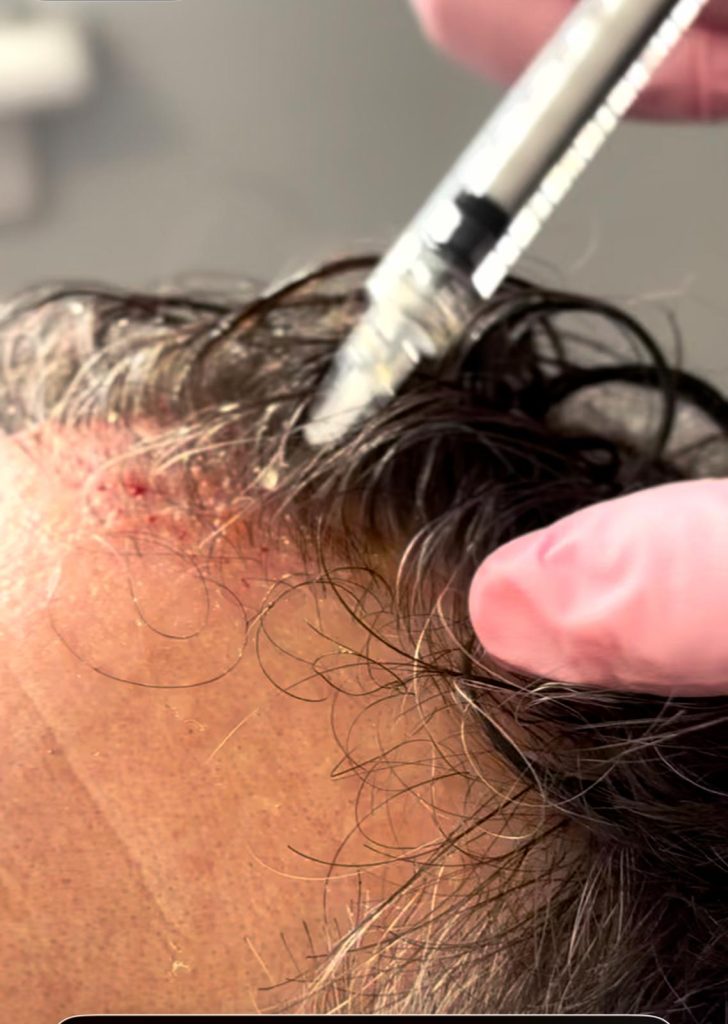
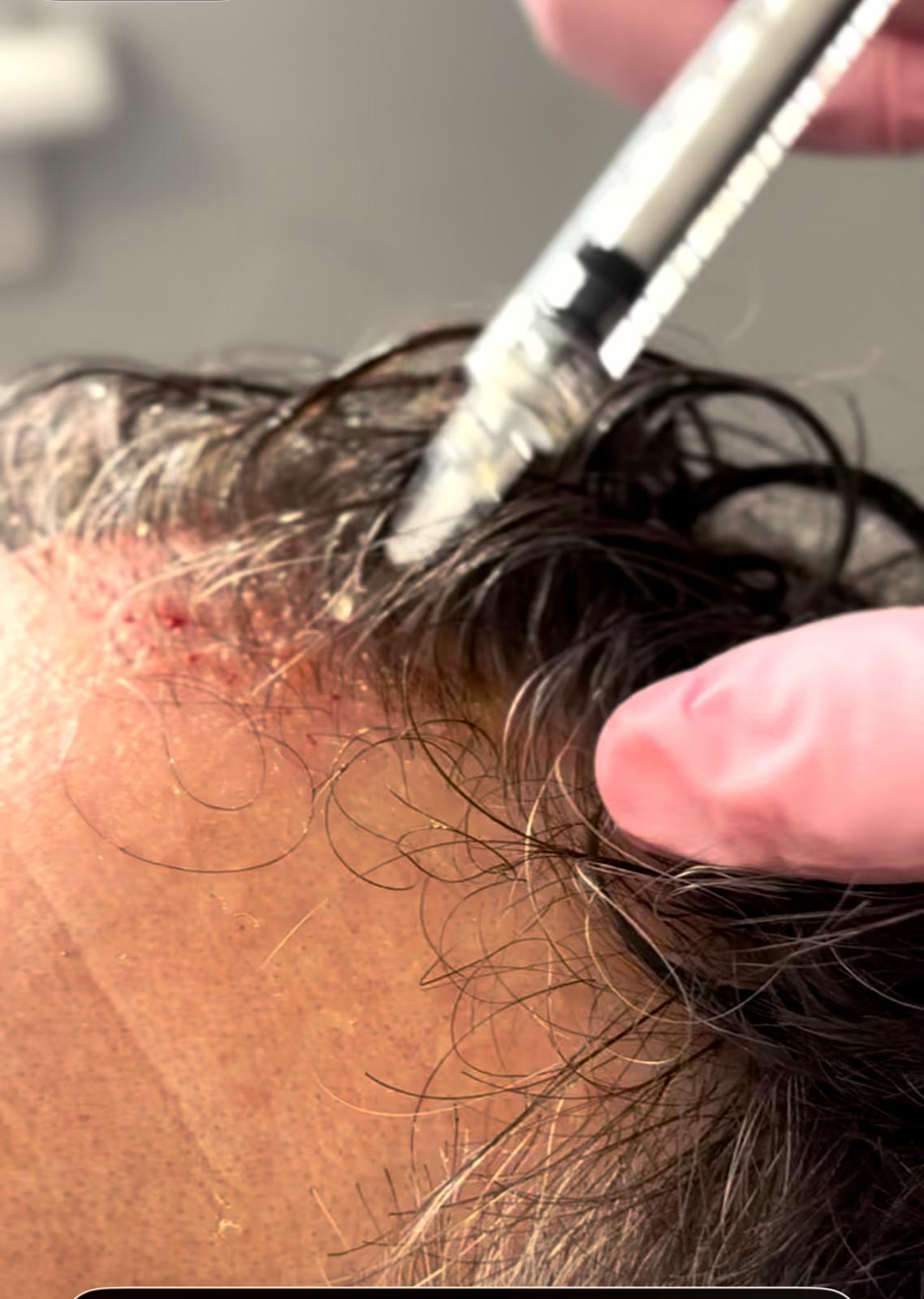
This preparation is then injected into selected areas of the scalp.
In hair restoration, the goal is to influence biological processes associated with hair follicle function.
PRP does not involve surgically transplanting hair follicles or inserting artificial hair.
Instead, it is being studied as a treatment that may improve hair growth in certain patients who still have functioning follicles.
How Does PRP Work for Hair Thinning?
Hair follicles undergo repeating cycles of growth, transition, rest, and shedding.
The active growth stage is called the anagen phase.
In certain forms of hair loss, particularly androgenetic alopecia, follicles gradually become smaller and produce finer hairs.
This process is known as follicular miniaturization.
PRP contains growth factors and other signaling molecules that may influence cellular activity around hair follicles.
Researchers have proposed that PRP could affect:
- Hair follicle signaling
- Growth-phase activity
- Local tissue responses
- Hair shaft characteristics
- Scalp biological processes
However, these proposed mechanisms do not guarantee that PRP will stimulate meaningful hair growth in every patient.
Clinical outcomes vary, and there is no universally standardized PRP preparation or injection protocol for hair loss.
Why Does Hair Start Thinning?
Before considering PRP, it is important to understand why hair loss is occurring.
Hair thinning can have several causes.
Androgenetic Alopecia
This is one of the most common forms of hair loss in both men and women.
It is influenced by genetics and sensitivity to hormones.
In men, it often causes recession at the temples and thinning at the crown.
In women, it commonly causes widening of the part and diffuse thinning over the top of the scalp.
Telogen Effluvium
This condition involves increased hair shedding, sometimes after:
- Major illness
- Surgery
- Significant stress
- Rapid weight loss
- Childbirth
- Nutritional deficiencies
- Medication changes
It may improve after the underlying trigger resolves.
Alopecia Areata
Alopecia areata is an autoimmune condition that can cause patchy hair loss.
It requires an appropriate medical assessment and may respond to treatments different from those used for pattern hair loss.
Nutritional Deficiencies
Iron deficiency and certain other nutritional problems may contribute to hair shedding.
Thyroid Disorders
Thyroid dysfunction can affect the normal hair-growth cycle.
Scalp Conditions
Inflammatory or infectious scalp conditions may interfere with healthy hair growth.
Because the causes differ, PRP should not be selected without first identifying the likely diagnosis.
Who Is a Good Candidate for PRP Hair Treatment?
PRP may be most relevant for adults with certain types of non-scarring hair loss, particularly early or moderate androgenetic alopecia.
Potential candidates may include people who:
- Have gradual pattern hair thinning
- Still have visible hair in the affected areas
- Notice reduced hair density
- Have early follicular miniaturization
- Prefer a non-surgical treatment approach
- Understand that multiple sessions may be needed
- Have realistic expectations about results
A healthcare professional should determine suitability after reviewing the patient’s medical history and examining the scalp.
Is PRP Better for Early Hair Loss?
PRP may be more promising when hair follicles are still present and producing hair.
In early pattern hair loss, follicles may become progressively smaller but remain active.
This creates a potential opportunity for treatments intended to support existing follicle function.
By contrast, long-standing areas without functioning follicles are less likely to respond.
PRP does not reliably create entirely new hair follicles.
This distinction is especially important for people with advanced baldness.
Can PRP Help Men With Receding Hairlines?
Men with androgenetic alopecia often notice:
- Temple recession
- Thinning at the crown
- Reduced density on the top of the scalp
- Progressive changes in hair thickness
PRP has been studied in men with pattern hair loss, and some clinical trials have reported improvements in hair density.
However, results are not consistent across all studies.
PRP may be more useful for thinning areas that still contain active follicles than for completely bald regions.
Men should not expect the procedure to reconstruct a significantly receded hairline in the same way a hair transplant might.
Can PRP Help Women With Thinning Hair?
Women may also be candidates for PRP, particularly when they have female-pattern hair loss.
Common signs include:
- A widening centre part
- Reduced ponytail thickness
- Increased scalp visibility
- Diffuse thinning over the crown
- Gradual reduction in hair density
However, women experiencing sudden shedding, menstrual changes, fatigue, or other symptoms may require assessment for underlying medical conditions.
PRP should not replace the investigation or treatment of thyroid disorders, iron deficiency, or other contributing factors.
Can PRP Help With Hair Loss After Pregnancy?
Postpartum hair shedding is commonly associated with changes in the hair-growth cycle following childbirth.
This is often a form of telogen effluvium.
In many cases, shedding improves naturally over time.
There is insufficient evidence to recommend PRP routinely for postpartum shedding.
A healthcare professional can help determine whether the shedding follows an expected pattern or requires additional investigation.
Can PRP Treat Stress-Related Hair Loss?
Stress can contribute to certain forms of hair shedding, but not every case of hair loss during a stressful period is caused by stress.
For telogen effluvium, identifying and addressing the trigger is often more important than injecting PRP.
PRP is not an established first-line treatment for stress-related shedding.
Can PRP Regrow Hair on Completely Bald Areas?
PRP is unlikely to restore significant hair growth where functioning follicles are absent.
It does not transplant follicles or create new follicular structures.
Patients with advanced baldness should receive realistic counseling about the limitations of non-surgical treatment.
How Many PRP Treatments Are Needed for Hair Loss?
This is one of the most common questions among people researching PRP hair restoration in Carleton Place.
There is no universally established number of sessions.
However, many clinical protocols and aesthetic providers use an initial series of approximately three to four treatments, often spaced about four weeks apart.
Some protocols use different schedules.
These are common approaches, not guaranteed or universally validated treatment requirements.
Example PRP Treatment Schedule
| Treatment stage | Common approach | Purpose |
|---|---|---|
| Initial treatment | First appointment | Begin the treatment series |
| Second treatment | Approximately 4 weeks later | Continue the planned protocol |
| Third treatment | Approximately 4 weeks later | Complete a common initial three-session series |
| Additional treatment | If clinically appropriate | Based on protocol and response |
| Maintenance | Individualized | Reassess whether further treatment is worthwhile |
The treating professional should explain why a particular schedule is recommended.
Why Are Multiple PRP Sessions Often Recommended?
PRP is not a permanent implant or surgical procedure.
Its proposed biological effects may be temporary.
Researchers have studied repeated sessions to determine whether they produce greater improvements than a single treatment.
However, the ideal number of sessions, injection interval, and maintenance frequency remain uncertain.
Patients should be cautious about packages that promise guaranteed regrowth after a fixed number of appointments.
Is One PRP Treatment Enough?
A single treatment is not generally considered sufficient to reproduce the outcomes reported in studies using repeated sessions.
However, that does not mean every patient needs the same number of appointments.
A responsible treatment plan should consider:
- Hair-loss diagnosis
- Severity
- Scalp health
- Medical history
- Response to earlier sessions
- Cost
- Patient preferences
How Often Is PRP Maintenance Needed?
Some providers recommend maintenance sessions every several months.
However, there is no universally established maintenance schedule supported by high-quality evidence.
The decision should depend on the patient’s response and whether additional treatment offers meaningful benefit.
PRP should not automatically be repeated indefinitely without reassessment.
When Will PRP Hair Results Become Visible?
Hair growth is a gradual biological process.
Even when a treatment is effective, visible changes generally take time.
Patients should not expect a noticeably fuller head of hair immediately after PRP injections.
Possible changes may include:
- Reduced perceived shedding
- Improved hair density
- Changes in hair shaft thickness
- Better scalp coverage
However, these improvements are not guaranteed.
Clinical studies often assess results several months after the start of treatment.
What Happens During the First Month?
Visible changes may be minimal.
The scalp may recover quickly from injections, but hair-growth changes generally cannot be judged after only a few days.
What Happens After Two to Three Months?
Some patients may begin noticing changes in shedding or hair appearance.
However, perceived changes should ideally be supported by standardized photographs or objective hair measurements.
What Happens After Four to Six Months?
This is often a more useful period for evaluating whether the treatment has produced a meaningful response.
Some studies report changes in hair density over this timeframe.
What Happens After Six Months?
A clinician may assess whether results justify maintenance or whether a different treatment strategy is needed.
Long-term outcomes remain variable.
What Do PRP Hair Before-and-After Results Look Like?
PRP before-and-after photographs may show:
- Less visible scalp
- Improved density at the crown
- Fuller-looking part lines
- Increased coverage in previously thinning areas
However, photographic comparisons can be misleading if the images use different lighting, hair lengths, styling, or camera angles.
A reliable comparison should use:
- Consistent lighting
- Similar hair length
- The same hairstyle
- Matching camera angles
- Similar hair moisture and styling conditions
Patients should also understand that a dramatic transformation shown in another person’s photograph does not predict their own response.
How Long Do PRP Hair Results Last?
The duration of improvement varies.
Pattern hair loss is generally progressive, meaning the underlying condition can continue even after cosmetic improvement.
PRP does not permanently eliminate genetic susceptibility to hair thinning.
Some patients may maintain improvement for a period, while others experience continued hair loss.
Long-term maintenance may be discussed, but durability is not guaranteed.
What Happens During a PRP Hair Consultation?
Before beginning treatment, the provider should evaluate the patient’s hair-loss pattern and medical history.
A consultation may include:
- Reviewing when hair thinning began
- Asking about family history
- Examining the scalp
- Assessing hair density
- Discussing medications
- Reviewing recent illnesses or major stressors
- Considering nutritional or hormonal factors
- Evaluating previous hair-loss treatments
Some patients may need laboratory testing or a dermatology referral.
The goal is to identify whether PRP is appropriate or whether another medical issue should be addressed first.
What Happens During a PRP Hair Treatment?
Although procedures vary, treatment generally involves several steps.
1. Blood Collection
A small sample of blood is collected from the patient.
2. PRP Preparation
The blood is processed using a centrifuge.
This separates the blood components and allows the preparation of platelet-rich plasma.
3. Scalp Preparation
The treatment area is cleaned.
The provider may use comfort measures to reduce discomfort.
4. PRP Injections
Small quantities of PRP are injected into selected areas of the scalp.
5. Aftercare
The patient receives instructions about scalp care, exercise, hair products, and symptoms that should prompt medical attention.
The complete appointment may take approximately 30–60 minutes or longer, depending on the clinic’s protocol.
Does PRP Hair Treatment Hurt?
PRP involves blood collection and multiple scalp injections.
Patients may experience:
- Pinching
- Pressure
- Stinging
- Temporary scalp tenderness
- Mild discomfort
The scalp contains many nerve endings, so some patients find injections uncomfortable.
Comfort measures may be available.
Pain tolerance varies, and patients should discuss concerns before treatment.
What Is the Recovery Time After PRP Hair Treatment?
PRP hair treatment is generally performed without surgery.
Many patients return to routine non-strenuous activities relatively soon.
Temporary effects may include:
- Scalp tenderness
- Redness
- Mild swelling
- Small bruises
- Minor bleeding at injection sites
- Headache
Patients should follow the provider’s instructions regarding washing the hair, applying styling products, and returning to strenuous activity.
Can Hair Be Washed After PRP?
There is no universal aftercare schedule applicable to every PRP protocol.
Some providers recommend waiting before washing the scalp.
Others may provide different instructions.
Patients should follow the treating professional’s specific recommendations.
Can PRP Cause Hair Shedding?
Hair shedding can occur for many reasons, including the natural hair-growth cycle and progression of the underlying condition.
There is insufficient evidence to establish that temporary shedding is a necessary or predictable stage of PRP treatment.
Patients who experience substantial or persistent shedding should contact their healthcare professional rather than assuming it means the treatment is working.
Is PRP Hair Restoration Safe?
PRP uses blood-derived material collected from the patient, which avoids some concerns associated with introducing unrelated biological material.
However, it is still an injection procedure.
Possible side effects include:
- Pain
- Bruising
- Swelling
- Bleeding
- Infection
- Scalp tenderness
- Headache
Appropriate blood handling, sterile technique, and trained medical supervision are essential.
Using the patient’s own blood does not eliminate procedural risks.
Who Should Avoid PRP Hair Treatment?
PRP may not be appropriate for patients with certain medical conditions.
These may include:
- Active scalp infections
- Certain blood disorders
- Significant platelet abnormalities
- Uncontrolled medical conditions
- Some bleeding disorders
- Conditions affecting wound healing
Medication use may also influence treatment planning.
Patients should not stop prescribed blood thinners or other medications without guidance from their prescribing clinician.
Is PRP Approved for Hair Loss in Canada?
The regulatory status of PRP preparation equipment should not be confused with approval of PRP as a proven treatment for hair loss.
Patients should ask whether the specific preparation system and proposed use comply with applicable Canadian requirements.
The clinical evidence for hair restoration should also be discussed separately from equipment authorization.
PRP vs Minoxidil for Hair Loss
Minoxidil is an established treatment option for certain types of pattern hair loss.
It is available in topical formulations and is commonly used to support hair growth.
Unlike PRP, which involves periodic injections, topical minoxidil is generally applied regularly over time.
PRP
- Requires blood collection and injections
- Usually involves clinic appointments
- Has variable evidence and treatment protocols
- May improve density in selected patients
Minoxidil
- Has an established evidence base for pattern hair loss
- Is typically used regularly
- May help maintain or improve hair growth
- Can cause side effects, including scalp irritation with topical formulations
The two approaches should not be considered automatically interchangeable.
PRP vs Finasteride
Finasteride is a prescription medication used for male-pattern hair loss in appropriate patients.
It works by reducing the conversion of testosterone to dihydrotestosterone, a hormone involved in follicular miniaturization.
PRP works through a different proposed mechanism.
Finasteride has stronger long-term clinical evidence for male-pattern hair loss than PRP.
However, it has potential adverse effects and is not suitable for everyone.
Patients should discuss medication benefits, risks, and contraindications with their healthcare professional.
Can PRP Be Combined With Other Hair-Loss Treatments?
Some clinical studies have investigated PRP alongside established therapies such as minoxidil.
Combination approaches may be considered for selected patients.
However, patients should not assume that adding PRP always improves results.
Treatment should be based on the diagnosis, evidence, medical history, and response to existing therapies.
PRP vs Hair Transplant Surgery
PRP and hair transplantation have fundamentally different goals.
PRP
PRP aims to influence existing hair follicles.
It does not relocate follicles.
Hair Transplantation
Hair transplantation involves moving follicles from a donor area to regions affected by hair loss.
For advanced pattern baldness, transplantation may offer structural restoration that PRP cannot provide.
However, transplantation involves surgery, cost, recovery, and suitability considerations.
PRP should not be marketed as a direct replacement for a hair transplant in patients with extensive baldness.
How Much Does PRP Hair Treatment Cost in Carleton Place?
Pricing varies by provider and treatment plan.
In Canadian private aesthetic settings, PRP hair restoration is often advertised at several hundred dollars per session.
For broad budgeting purposes, some clinics charge approximately $400–$900 CAD per session, although actual prices may fall outside this range.
This is not a verified price for Rejovenation or a confirmed Carleton Place market rate.
Patients should request an individualized quote.
What Affects PRP Hair Treatment Cost?
Pricing may depend on:
- PRP preparation system
- Number of sessions
- Treatment area
- Provider qualifications
- Consultation requirements
- Follow-up appointments
- Whether additional treatments are recommended
How Much Would Three PRP Sessions Cost?
Using the illustrative range above:
| Sessions | At $400/session | At $650/session | At $900/session |
|---|---|---|---|
| 1 | $400 | $650 | $900 |
| 3 | $1,200 | $1,950 | $2,700 |
| 4 | $1,600 | $2,600 | $3,600 |
These calculations are examples only. They are not a Rejovenation price list.
Is PRP Hair Restoration Covered by Insurance?
When performed for cosmetic hair restoration, PRP is generally paid for privately.
Patients should not assume that OHIP or private insurance will cover treatment.
Coverage should be confirmed with the relevant insurer.
Is PRP Hair Treatment Worth the Cost?
The answer depends on the patient’s diagnosis and expectations.
For someone with early pattern hair loss and functioning follicles, PRP may be an option worth discussing.
However, the response is uncertain, and treatment can require multiple appointments.
Patients should compare:
- Expected improvement
- Strength of evidence
- Total treatment cost
- Number of sessions
- Maintenance requirements
- Alternative treatments
- Potential side effects
The most appropriate treatment is not necessarily the newest or most expensive.
How to Support Hair Health Between Treatments
PRP should not replace good scalp care or management of underlying medical conditions.
Maintain Adequate Nutrition
Protein, iron, and other nutrients contribute to normal hair growth.
Supplements should be used when medically appropriate rather than automatically taken for every case of hair loss.
Avoid Excessive Hair Tension
Tight hairstyles can contribute to traction-related hair loss.
Manage Scalp Conditions
Persistent itching, scaling, redness, or inflammation should be assessed.
Address Medical Causes
Thyroid disorders, iron deficiency, and medication-related shedding may require specific treatment.
Use Evidence-Based Hair-Loss Treatments
For androgenetic alopecia, established medications may be appropriate depending on the patient’s health and preferences.
Monitor Changes Consistently
Photographs taken under similar conditions can help document whether hair density is changing over time.
Frequently Asked Questions About PRP Hair Treatment in Carleton Place
Does PRP really work for thinning hair?
Some clinical studies show improvements in hair density in patients with androgenetic alopecia. However, results vary, and PRP is not effective for every type of hair loss.
Who is the best candidate for PRP hair restoration?
Adults with early or moderate pattern hair loss who still have functioning follicles may be more suitable candidates than those with advanced baldness.
How many PRP sessions are needed for hair growth?
Many protocols use an initial series of three to four sessions, but there is no universally established schedule.
Is one PRP treatment enough?
A single session may not reproduce the results observed in studies using multiple treatments.
How long does PRP take to regrow hair?
Meaningful changes, when they occur, generally take several months to evaluate.
Can PRP regrow hair on a bald scalp?
PRP is unlikely to restore substantial hair growth where functioning follicles are absent.
Does PRP work for women?
Some studies suggest benefits for selected women with pattern hair loss, but an accurate diagnosis is essential.
Does PRP work for receding hairlines?
It may help selected thinning areas, but it does not reliably rebuild a significantly receded hairline.
Is PRP better than minoxidil?
There is insufficient evidence to conclude that PRP is universally better. Minoxidil has a more established role in pattern hair-loss treatment.
Is PRP painful?
Scalp injections may cause pinching, pressure, and temporary tenderness.
Is there downtime after PRP?
Many patients resume ordinary activities relatively quickly, although temporary redness, tenderness, or swelling can occur.
Can PRP cause more hair loss?
Hair shedding may occur for several reasons. Persistent or significant shedding should be evaluated rather than assumed to be a normal treatment response.
How long do PRP results last?
Duration varies, and the underlying hair-loss condition may continue to progress. Maintenance is not guaranteed to preserve results.
Is PRP safe?
PRP is generally minimally invasive but carries risks such as pain, bruising, bleeding, and infection.
How much does PRP hair treatment cost in Carleton Place?
Costs vary. Broad Canadian private-market estimates may range from approximately $400–$900 CAD per session, but patients should obtain a current quote.
Is PRP better than a hair transplant?
They serve different purposes. PRP aims to support existing follicles, while hair transplantation relocates follicles to areas of hair loss.
Can PRP be combined with minoxidil?
Combination treatment may be considered for selected patients, but suitability should be determined by a qualified healthcare professional.
What happens if PRP treatment is stopped?
Any improvement may diminish over time, and the underlying pattern hair loss may continue.
Final Thoughts: Is PRP for Thinning Hair Worth Considering in Carleton Place?
For adults researching PRP for thinning hair in Carleton Place, platelet-rich plasma offers a non-surgical approach that has shown potential benefits in some clinical studies of pattern hair loss.
The treatment involves preparing PRP from the patient’s own blood and injecting it into selected areas of the scalp.
Some patients may experience improvements in hair density or thickness, but outcomes are variable.
PRP is generally more promising when functioning hair follicles remain present, particularly in early or moderate androgenetic alopecia.
It is less likely to restore substantial hair growth in long-standing bald areas.
Many treatment protocols involve an initial series of three to four appointments, followed by individualized reassessment. However, no standardized schedule guarantees success.
For residents of Carleton Place, Kanata, Stittsville, and Arnprior, the most important first step is identifying the cause of hair thinning.
A qualified healthcare professional can determine whether the concern involves pattern hair loss, temporary shedding, nutritional deficiencies, hormonal changes, or another medical condition.
An individualized assessment also helps patients understand whether PRP, established medications, or another treatment approach is most appropriate.
The goal of hair restoration should be realistic improvement supported by appropriate medical care, not promises of guaranteed regrowth.