
Healthy-looking skin is not simply about avoiding wrinkles. Skin texture, hydration, elasticity, and overall radiance all contribute to a refreshed, youthful appearance. As people age, changes in collagen, moisture retention, and skin renewal can make the complexion appear dull, uneven, or less firm.
For individuals in Manotick, Barrhaven, Riverside South, and nearby Ottawa communities, facial rejuvenation treatments are increasingly focused on improving skin quality rather than dramatically changing facial features.
One treatment that often comes up in these discussions is mesotherapy.
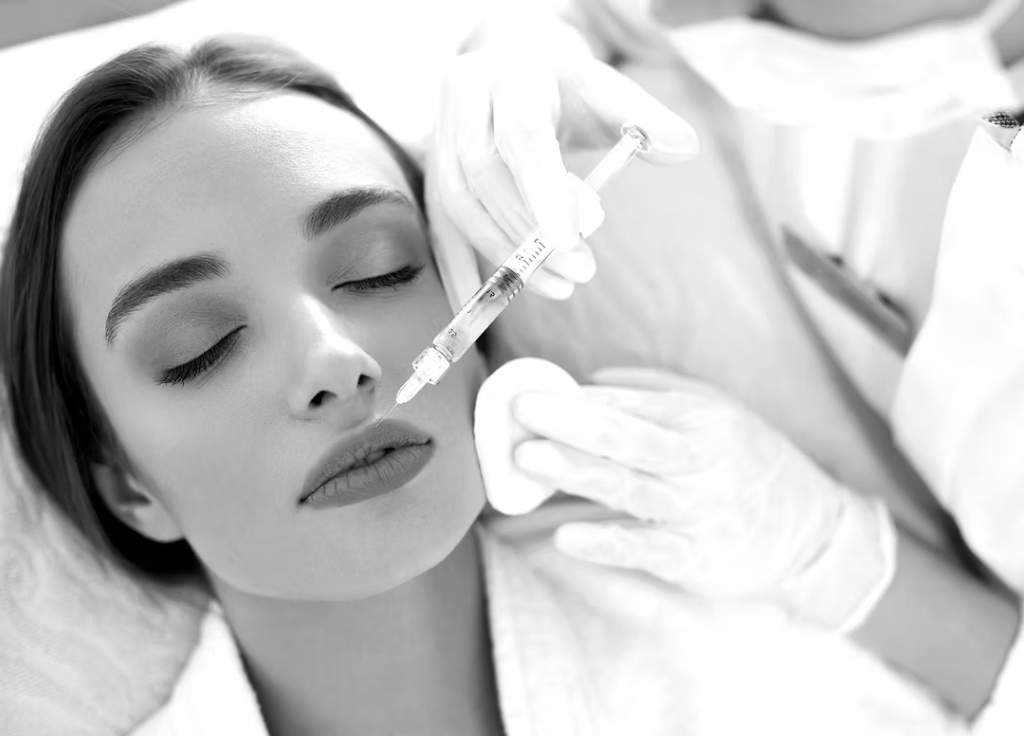
Mesotherapy is a minimally invasive technique involving multiple small injections into the skin. Depending on the treatment formulation, these injections may contain hyaluronic acid, vitamins, amino acids, or other substances intended to address particular skin concerns.
In facial aesthetics, mesotherapy is commonly promoted for improving hydration, smoothing fine lines, and enhancing skin texture.
However, results depend on the specific ingredients, injection technique, and individual skin characteristics. Mesotherapy is not one standardized treatment, and scientific evidence varies considerably between formulations.
This guide explains how mesotherapy for facial rejuvenation in Manotick works, the benefits being investigated, what patients can realistically expect, how it compares with other aesthetic treatments, and what to consider before booking a consultation.
What Is Facial Mesotherapy?
Mesotherapy is an injection technique that delivers small quantities of selected substances into superficial layers of the skin.
The technique originated in France and has since been adapted for various medical and aesthetic applications.
In cosmetic settings, facial mesotherapy may involve formulations containing:
- Non-cross-linked hyaluronic acid
- Vitamins
- Amino acids
- Minerals
- Antioxidants
- Other skin-conditioning ingredients
The exact formulation varies by provider and product.
This distinction is important because two clinics advertising mesotherapy may be offering substantially different procedures.
The benefits, risks, and evidence associated with one formulation cannot automatically be applied to another.
How Does Mesotherapy Work?
Mesotherapy involves placing small amounts of a selected formulation into the skin through multiple superficial injections.
The proposed effects depend on the ingredients.
For example, hyaluronic acid attracts and retains water, which may temporarily improve the appearance of skin hydration and smoothness.
Other formulations are marketed for their antioxidant or skin-conditioning properties, although their effectiveness after injection may not be well established.
The injection process itself can also create a local tissue response, but this does not establish that mesotherapy reliably stimulates collagen or reverses skin aging.
A useful consultation should distinguish between the expected effects of the ingredients and the effects claimed for the injection technique.
Why Skin Quality Changes With Age
Skin aging is influenced by internal biological processes and external environmental exposure.
Over time, the skin may experience:
- Reduced elasticity
- Changes in collagen organization
- Decreased moisture retention
- Slower surface renewal
- Increased fine lines
- Uneven pigmentation
- Rougher texture
- Reduced firmness
Sun exposure is a particularly important contributor to premature skin aging.
Repeated ultraviolet exposure can damage collagen and contribute to wrinkles, pigmentation changes, and loss of elasticity.
For homeowners and families enjoying outdoor activities around Manotick, the Rideau River, and surrounding Ottawa communities, consistent sun protection remains an essential part of long-term skin care.
Mesotherapy may be considered as an additional cosmetic treatment, but it does not replace sunscreen or evidence-based skincare.
Mesotherapy for Skin Hydration
Hydration is one of the most common reasons people explore facial mesotherapy.
Dehydrated skin can appear:
- Dull
- Tight
- Rough
- Less supple
- More visibly lined
Some mesotherapy formulations contain hyaluronic acid, a substance that can bind water.
When appropriately formulated and administered, injectable hyaluronic acid products may improve certain measures of skin hydration.
However, this does not mean every mesotherapy mixture produces the same effect.
The concentration, molecular properties, injection depth, and regulatory status of the product all matter.
Can Mesotherapy Help Dry Skin?
It may improve the appearance of hydration in some patients, particularly when an appropriate hyaluronic acid formulation is used.
However, dry skin and dehydrated skin are not identical.
Dry skin often involves impaired skin-barrier function and insufficient skin lipids.
Dehydrated skin refers more specifically to reduced water content.
Patients with chronic dryness may also benefit from:
- Gentle cleansers
- Barrier-supporting moisturizers
- Appropriate environmental protection
- Avoiding excessive exfoliation
- Managing underlying skin conditions
Mesotherapy should not be considered a substitute for these measures.
Mesotherapy for Fine Lines
Fine lines can develop from several factors, including:
- Natural aging
- Sun exposure
- Repeated facial expressions
- Skin dehydration
- Changes in collagen and elastin
- Reduced skin thickness
Some superficial lines become more noticeable when the skin lacks moisture.
Improving hydration may temporarily soften their appearance.
However, mesotherapy is unlikely to eliminate deep wrinkles or significantly correct folds caused by muscle movement or facial volume loss.
Which Fine Lines May Respond?
Patients may be interested in mesotherapy for:
- Fine cheek lines
- Superficial lines around the mouth
- Mild crepiness
- Early textural aging
- Lines accentuated by dehydration
Results vary, and treatment should not be presented as a guaranteed wrinkle-removal procedure.
Mesotherapy for Uneven Skin Texture
Skin texture refers to how smooth or rough the skin appears and feels.
Uneven texture may be associated with:
- Dryness
- Sun damage
- Enlarged-looking pores
- Superficial fine lines
- Acne-related changes
- Irregular surface renewal
Mesotherapy is sometimes promoted as a way to improve skin smoothness.
Some injectable hyaluronic acid studies have reported improvements in skin-quality measures, but evidence is not equally strong for every mesotherapy formulation.
Patients should be cautious about claims that mesotherapy can permanently minimize pores, erase acne scars, or completely resurface damaged skin.
More pronounced texture concerns may require a different treatment approach.
Can Mesotherapy Make Skin Look Brighter?
Skin brightness is influenced by several factors.
A complexion may look dull because of:
- Dryness
- Uneven pigmentation
- Surface buildup
- Inflammation
- Sun damage
- Poor light reflection from rough skin
If a treatment improves hydration or superficial smoothness, the skin may appear more radiant.
However, mesotherapy is not an established universal treatment for hyperpigmentation.
Patients with melasma, sunspots, or post-inflammatory pigmentation may require targeted treatment.
Does Mesotherapy Stimulate Collagen?
Collagen is a major structural protein that contributes to skin strength and firmness.
Certain mesotherapy products are marketed as collagen-stimulating treatments.
However, the evidence depends on the formulation.
It would be inaccurate to claim that all mesotherapy treatments reliably stimulate substantial new collagen production.
Some injectable skin-quality products have been studied for effects on elasticity and dermal characteristics, but many mesotherapy mixtures lack robust clinical trials.
Patients should ask whether the specific product being offered has evidence supporting its advertised benefits.
Can Mesotherapy Improve Skin Elasticity?
Skin elasticity refers to the ability of the skin to return to its original position after stretching.
It is influenced by collagen, elastin, hydration, and overall tissue structure.
Some patients may notice that skin looks more supple following hydration-focused treatments.
However, improving superficial hydration is not the same as correcting significant skin laxity.
Mesotherapy should not be expected to produce a surgical lifting effect or reliably tighten loose facial skin.
For patients with substantial laxity, other treatments may be more appropriate.
Mesotherapy vs HydraFacial: What Is the Difference?
Both treatments may be discussed by patients interested in hydration and skin radiance, but they work differently.
HydraFacial
HydraFacial is a non-injectable treatment that combines cleansing, exfoliation, extraction, and topical hydration.
It primarily addresses the skin surface.
Mesotherapy
Mesotherapy uses injections to introduce selected substances into superficial skin layers.
The main differences include:
| Feature | Mesotherapy | HydraFacial |
|---|---|---|
| Method | Multiple small injections | Non-injectable facial device |
| Primary focus | Ingredient-dependent skin-quality goals | Cleansing, exfoliation, topical hydration |
| Needle use | Yes | No |
| Possible bruising | Yes | Uncommon |
| Recovery | Temporary marks or swelling possible | Usually minimal |
| Evidence | Varies significantly by formulation | Depends on the specific skin concern |
| Suitable for | Selected patients comfortable with injections | Patients seeking a non-injectable facial |
Neither treatment is automatically better.
Someone primarily concerned with surface congestion may prefer a cleansing and exfoliation treatment.
Someone exploring injectable hydration may be interested in mesotherapy, provided the formulation is appropriate and the risks are understood.
Mesotherapy vs Botox
Botox and other neuromodulators work by temporarily reducing activity in targeted muscles.
They are commonly used to soften expression-related wrinkles such as:
- Forehead lines
- Frown lines
- Crow’s feet
Mesotherapy does not work through the same mechanism.
It does not reliably relax facial muscles or prevent expression wrinkles.
For a patient with prominent dynamic wrinkles, a neuromodulator may be more directly suited to the concern.
For a patient focused on skin hydration or superficial texture, a different approach may be considered.
Mesotherapy vs Dermal Fillers
Dermal fillers are designed primarily to restore or enhance volume.
They may be used to address:
- Certain facial folds
- Volume loss
- Facial contours
- Selected hollow areas
Mesotherapy generally involves smaller quantities of substances distributed superficially rather than creating significant structural volume.
Therefore, mesotherapy should not be expected to replace cheek filler or correct deep facial hollows.
Mesotherapy vs PRP and PRF
Platelet-rich plasma (PRP) and platelet-rich fibrin (PRF) are prepared from the patient’s own blood.
These treatments use blood-derived components involved in tissue signaling and repair.
Mesotherapy, by contrast, usually involves prepared injectable formulations containing selected ingredients.
The treatments differ in their materials and proposed mechanisms.
None should automatically be described as superior.
The appropriate choice depends on the skin concern, the evidence supporting the specific procedure, and the patient’s medical history.
Mesotherapy vs Chemical Peels
Chemical peels use selected acids or other agents to create controlled exfoliation.
They may be appropriate for:
- Certain pigmentation concerns
- Rough surface texture
- Superficial signs of sun damage
- Selected acne-related concerns
Mesotherapy does not produce the same controlled resurfacing effect.
A patient with significant pigmentation or surface damage may benefit more from a treatment specifically designed for those concerns.
What Happens During a Mesotherapy Consultation in Manotick?
A professional consultation should begin with an assessment of the patient’s skin and treatment goals.
The provider may evaluate:
- Skin hydration
- Fine lines
- Texture
- Pigmentation
- Elasticity
- Sensitivity
- Previous cosmetic treatments
- Medical history
- Allergies
- Current medications
The provider should also identify the exact product being considered.
Patients should be told what ingredients are included, whether the formulation is intended for injection, and what evidence supports its use.
What Happens During a Facial Mesotherapy Appointment?
Although protocols vary, a typical appointment may involve several stages.
Skin Assessment
The provider examines the areas being treated and confirms the treatment plan.
Cleansing
The skin is cleaned to reduce contamination.
Comfort Measures
A topical anesthetic may be offered depending on the injection technique.
Injection Procedure
Small amounts of the selected formulation are injected into designated areas.
Post-Treatment Care
The provider gives instructions for protecting the skin and monitoring for complications.
Treatment duration varies according to the areas involved and the preparation required.
Does Facial Mesotherapy Hurt?
Patients may experience:
- Small pinching sensations
- Mild stinging
- Pressure
- Temporary tenderness
Discomfort depends on the technique, injection depth, product, and individual pain tolerance.
Patients concerned about pain should discuss comfort measures before treatment.
What Is the Recovery Time After Mesotherapy?
Mesotherapy is often described as a minimally invasive procedure, but it can still produce visible temporary effects.
These may include:
- Redness
- Swelling
- Small raised bumps
- Bruising
- Tenderness
- Temporary skin sensitivity
Some people return to ordinary activities shortly afterward.
Others may prefer to allow several days for bruising or injection marks to settle.
The provider should explain the expected recovery based on the specific product and procedure.
When Will Mesotherapy Results Appear?
Results depend on the formulation and the treatment goal.
Some patients may notice temporary changes in hydration or skin appearance relatively soon after treatment.
Other proposed benefits may take longer or may not occur.
There is no universal timeline that applies to all facial mesotherapy treatments.
Patients should be cautious about promises of immediate collagen rebuilding or permanent wrinkle reduction.
How Long Do Mesotherapy Results Last?
The duration of improvement varies.
Factors may include:
- Product formulation
- Skin condition
- Treatment frequency
- Age
- Sun exposure
- Skincare habits
- Individual biological response
There is insufficient evidence to guarantee a specific duration across all mesotherapy products.
How Many Mesotherapy Sessions Are Needed?
Some providers recommend a series of treatments.
However, there is no universally accepted schedule for every formulation.
The recommended number of sessions should be based on the specific product, clinical evidence, treatment goals, and patient response.
Patients should ask why multiple appointments are being recommended and what degree of improvement is realistically expected.
Is Facial Mesotherapy Safe?
Mesotherapy involves injections and therefore carries medical risks.
Potential complications include:
- Bruising
- Swelling
- Pain
- Infection
- Allergic reactions
- Inflammatory nodules
- Pigmentation changes
- Persistent skin irritation
- Scarring
Risks can vary considerably depending on the injected ingredients.
The fact that a formulation contains vitamins or hyaluronic acid does not automatically establish that it is safe for injection.
Some products marketed for topical skincare are not appropriate for injection.
Patients should confirm that the provider uses products intended and legally authorized for the proposed purpose.
Why Product Quality Matters
Mesotherapy is a broad term, not a single standardized medication.
This creates important differences between treatment options.
Patients should ask:
- What is the product name?
- What ingredients does it contain?
- Who manufactures it?
- Is it intended for injection?
- What is its regulatory status in Canada?
- What clinical evidence supports the proposed benefits?
- What adverse effects have been reported?
Health Canada regulates drugs and medical devices according to their intended use and applicable legal classification.
Patients can review general product-safety information through Health Canada.
Who May Be Interested in Mesotherapy?
Facial mesotherapy may appeal to adults who:
- Have mild skin dehydration
- Notice early fine lines
- Want to improve superficial skin appearance
- Are interested in injectable skin-quality treatments
- Prefer subtle cosmetic changes
- Understand that results are formulation-dependent
A consultation is necessary to determine whether the procedure is appropriate.
Who May Need to Avoid or Postpone Treatment?
Mesotherapy may not be appropriate for everyone.
Additional caution may be needed for patients with:
- Active skin infections
- Known allergies to treatment ingredients
- Certain bleeding disorders
- Uncontrolled medical conditions
- A history of severe injection reactions
- Pregnancy or breastfeeding
- Significant inflammatory skin conditions
Suitability depends on the specific formulation and individual medical circumstances.
How Much Does Facial Mesotherapy Cost in Manotick?
Pricing depends on the treatment plan and product.
Factors affecting cost include:
- Ingredients used
- Treatment area
- Number of sessions
- Provider qualifications
- Product quantity
- Consultation requirements
There is no single established mesotherapy price for Manotick.
Patients should request a current individualized quote rather than relying on generic online estimates.
Is Mesotherapy Worth the Cost?
The answer depends on expectations.
Someone seeking modest improvement in hydration or skin appearance may be interested in a carefully selected injectable skin-quality treatment.
However, someone expecting dramatic wrinkle removal, significant tightening, or correction of deep folds may be disappointed.
Patients should compare the expected benefit, total treatment cost, recovery, and risks with other available options.
The most expensive or newest procedure is not necessarily the most appropriate.
How to Maintain Healthy-Looking Skin Between Treatments
Professional aesthetic procedures are only one part of long-term skin care.
Daily habits remain important.
Use Broad-Spectrum Sunscreen
Regular sunscreen use helps reduce ultraviolet damage that contributes to premature aging.
Moisturize Consistently
An appropriate moisturizer supports the skin barrier and helps reduce water loss.
Avoid Excessive Exfoliation
Over-exfoliation can increase irritation and compromise the skin barrier.
Consider Evidence-Based Skincare
Depending on the individual’s needs, a qualified professional may recommend ingredients such as retinoids or other established skincare products.
Address Underlying Skin Conditions
Persistent dryness, redness, or inflammation may require medical evaluation.
Maintain Realistic Expectations
Aesthetic treatments may improve selected concerns, but no procedure stops the natural aging process.
Frequently Asked Questions About Mesotherapy in Manotick
What is facial mesotherapy?
Facial mesotherapy is a technique involving multiple small injections of selected substances into superficial skin layers.
Does mesotherapy hydrate the skin?
Certain injectable hyaluronic acid formulations may improve skin hydration, but results vary by product and patient.
Can mesotherapy reduce fine lines?
It may temporarily improve the appearance of some superficial lines, particularly those accentuated by dehydration. It is not a proven solution for deep wrinkles.
Does mesotherapy stimulate collagen?
Some formulations are being studied for skin-remodeling effects, but substantial collagen stimulation has not been established for all mesotherapy treatments.
Is mesotherapy better than Botox?
They address different concerns. Botox targets muscle-related wrinkles, while mesotherapy is generally marketed for skin-quality goals.
Is mesotherapy better than HydraFacial?
Neither is universally better. HydraFacial is non-injectable and focuses on cleansing, exfoliation, and hydration, while mesotherapy involves injections.
Can mesotherapy improve acne scars?
Evidence is insufficient to consider mesotherapy a reliable treatment for significant acne scarring.
How long does facial mesotherapy take?
Appointment length varies depending on the treatment area, preparation, and injection protocol.
Is mesotherapy painful?
Temporary pinching, stinging, or tenderness can occur. Comfort measures may be available.
How long is recovery?
Redness, swelling, small bumps, or bruising may occur. Some patients recover quickly, while others need several days for visible effects to settle.
How many sessions are needed?
There is no universal treatment schedule. Recommendations depend on the product and treatment goals.
Are mesotherapy results permanent?
No permanent anti-aging effect has been established. Any improvement may diminish over time.
Is mesotherapy safe for sensitive skin?
Sensitive skin may require additional assessment. Product ingredients and injection-related risks should be reviewed before treatment.
Can mesotherapy be combined with other facial treatments?
Some patients may be candidates for multiple aesthetic procedures, but timing and compatibility should be determined by a qualified professional.
What is the best age to start mesotherapy?
There is no universally recommended starting age. Treatment decisions should be based on individual concerns and medical suitability rather than age alone.
Is mesotherapy suitable for men?
Facial mesotherapy is not inherently limited by gender. Suitability depends on the patient’s skin concerns, health, and treatment goals.
Final Thoughts: Is Mesotherapy for Facial Rejuvenation Worth Considering in Manotick?
For individuals researching mesotherapy for facial rejuvenation in Manotick, the treatment offers a different approach from traditional wrinkle-relaxing injections or volumizing fillers.
Mesotherapy involves delivering selected formulations into superficial skin layers, with the goal of addressing concerns such as hydration, fine lines, and texture.
Certain injectable hyaluronic acid products may improve aspects of skin hydration and appearance. However, mesotherapy is not a standardized treatment, and results cannot be generalized across all formulations.
Patients should be cautious about promises of dramatic collagen rebuilding, permanent wrinkle reduction, or substantial skin tightening.
For residents of Manotick, Barrhaven, Riverside South, and surrounding Ottawa communities, the most useful starting point is a professional consultation focused on the actual cause of the skin concern.
A qualified provider can assess skin texture, hydration, aging changes, and medical history while explaining the proposed product, potential benefits, limitations, and risks.
Ultimately, successful facial rejuvenation is not about choosing the trendiest procedure. It is about selecting a treatment that matches the individual’s skin needs and expectations while maintaining a strong foundation of sun protection and appropriate daily skincare.