
Hair loss affects millions of men and women worldwide, and for many individuals in Arnprior, it can be a frustrating and emotional experience. Whether hair thinning develops gradually over time or appears more suddenly due to stress, hormonal changes, genetics, or aging, losing hair often impacts confidence and self-image.
As awareness of non-surgical hair restoration options grows, more people throughout Arnprior, as well as nearby communities such as Kanata and Carleton Place, are exploring regenerative treatments like PRP Hair Restoration.
PRP, or Platelet-Rich Plasma, has become one of the most talked-about solutions for individuals seeking a natural approach to addressing hair thinning and early hair loss. Unlike surgical hair transplants, PRP uses the body’s own healing properties to stimulate hair follicles and encourage healthier hair growth.
But can PRP actually reverse hair loss? How effective is it? What does it cost? And what should someone realistically expect from treatment?
This comprehensive guide answers those questions and more.
Understanding Hair Loss
Before exploring PRP treatment, it is important to understand why hair loss occurs.
Hair growth follows a natural cycle consisting of three phases:
Growth Phase (Anagen)
Hair actively grows from the follicle.
Transition Phase (Catagen)
Hair growth slows and the follicle prepares for rest.
Resting Phase (Telogen)
Hair sheds naturally and is replaced by new growth.
When this cycle becomes disrupted, hair thinning and hair loss may occur.
Common causes include:
- Genetics
- Hormonal changes
- Aging
- Stress
- Nutritional deficiencies
- Medical conditions
- Certain medications
For many people in Arnprior, hereditary hair loss remains the most common factor.
What Is PRP Hair Restoration?
PRP stands for Platelet-Rich Plasma.
The treatment uses concentrated platelets derived from a patient’s own blood.
Platelets contain growth factors that play a key role in tissue repair and regeneration.
During PRP hair restoration:
- A small blood sample is collected.
- The blood is processed in a centrifuge.
- Platelet-rich plasma is separated.
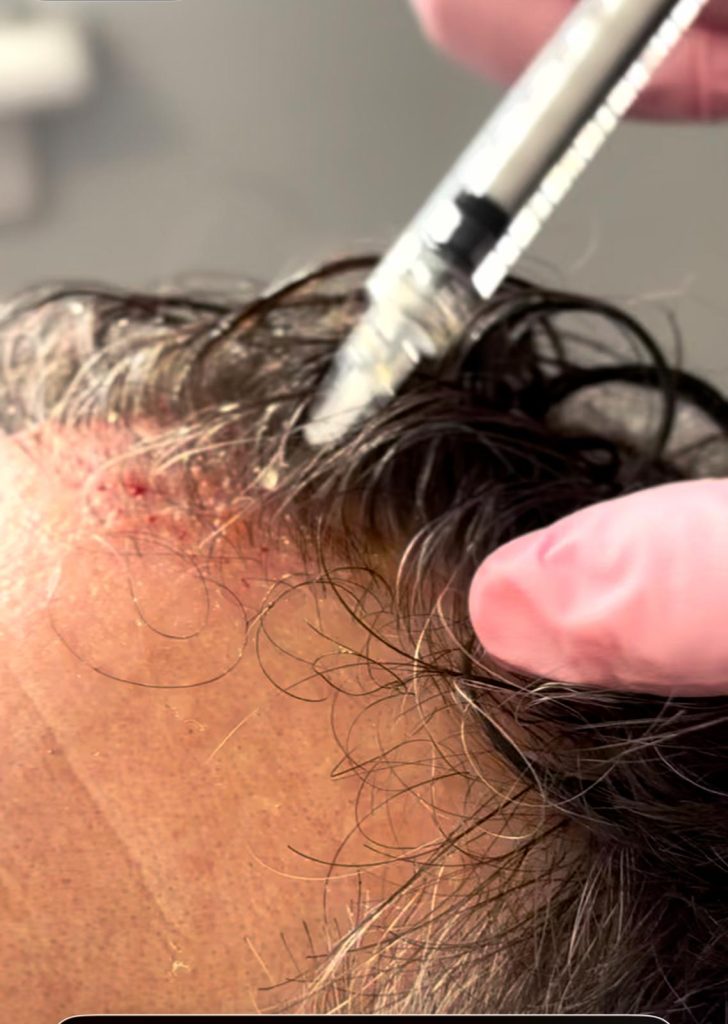
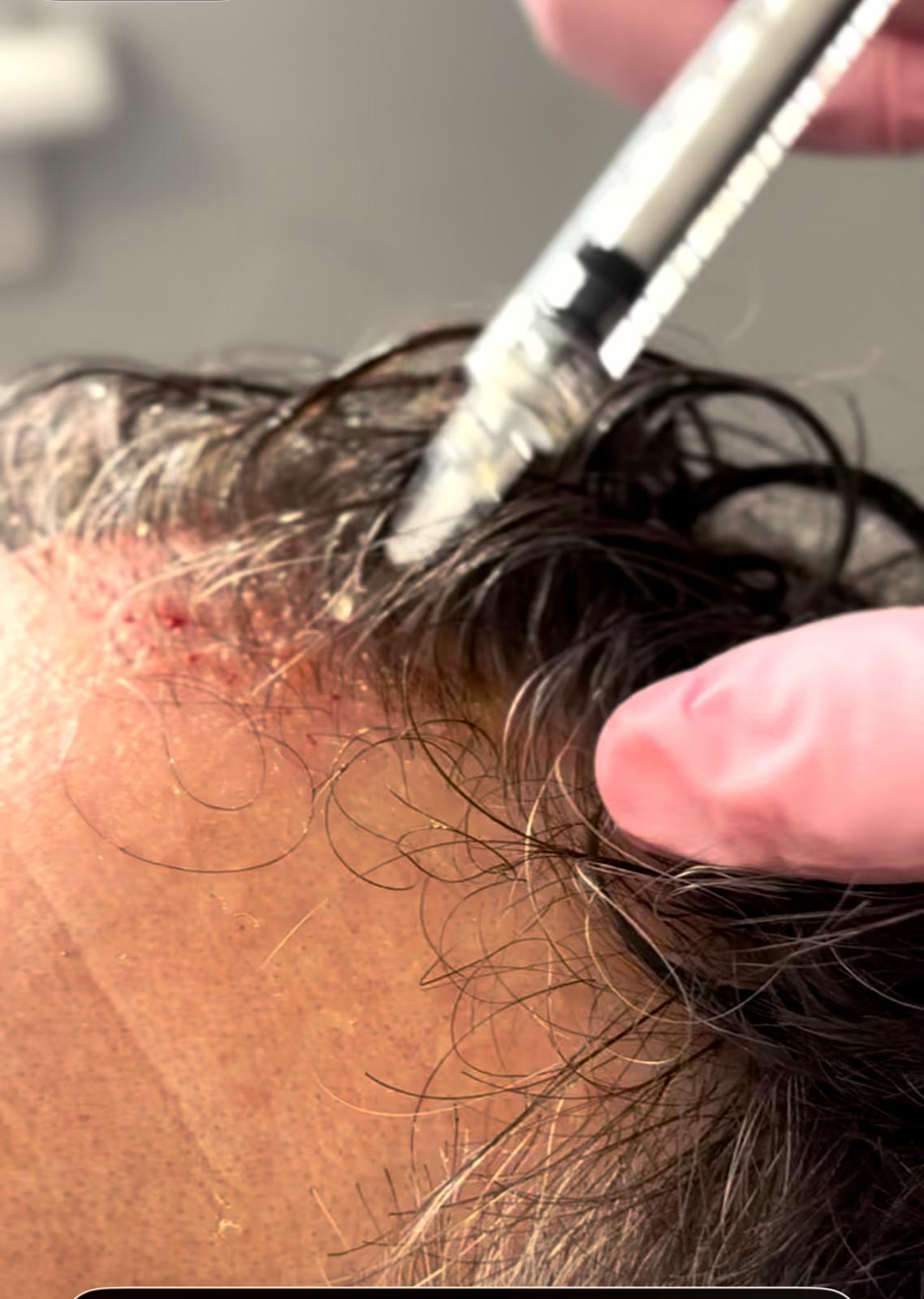
- The PRP is injected into areas of hair thinning.
The goal is to stimulate weakened hair follicles and encourage healthier hair growth.
Because PRP uses the patient’s own blood, it is considered a natural regenerative treatment.
Why PRP Is Growing in Popularity in Arnprior
Many individuals in Arnprior are looking for alternatives to surgery and long-term medication use.
PRP appeals to patients because it offers:
- Non-surgical treatment
- Minimal downtime
- Natural approach
- Personalized treatment
- Potential improvement in hair density
Residents from nearby areas such as Kanata and Carleton Place are also increasingly seeking regenerative hair restoration options that fit into busy lifestyles.
How PRP Works for Hair Growth
Hair follicles require a healthy environment to function properly.
As follicles weaken, hair strands may become:
- Thinner
- Shorter
- Less dense
PRP works by delivering growth factors directly to the scalp.
These growth factors may help:
- Improve blood supply to hair follicles
- Support follicle function
- Extend the growth phase of hair
- Promote thicker hair strands
The treatment focuses on revitalizing existing follicles rather than creating entirely new ones.
This is why PRP is often most effective during the earlier stages of hair loss.
Can PRP Reverse Hair Loss?
One of the most common questions patients ask is:
“Can PRP actually reverse hair loss?”
The answer depends on several factors.
PRP May Help Improve:
- Hair density
- Hair thickness
- Hair growth rate
- Overall scalp health
PRP May Be Less Effective When:
- Hair follicles are completely inactive
- Significant baldness is already present
- Hair loss has progressed for many years
For individuals experiencing early to moderate thinning, PRP often produces more noticeable improvements.
Rather than completely reversing advanced hair loss, PRP is generally viewed as a treatment that helps strengthen and preserve existing hair.
Who Is a Good Candidate for PRP Hair Restoration?
PRP may be suitable for individuals who:
- Are experiencing early-stage hair loss
- Notice thinning hair
- Have hereditary hair loss
- Want a non-surgical option
- Have active hair follicles
Many patients throughout Arnprior and Kanata seek treatment before hair loss becomes severe because earlier intervention often leads to better outcomes.
PRP Before and After: What Results Can Be Expected?
Understanding realistic expectations is essential.
PRP does not provide instant results.
Hair growth is a gradual biological process.
First Month
Patients may notice:
- Reduced hair shedding
- Improved scalp health
Two to Three Months
Many individuals begin seeing:
- Early regrowth
- Increased hair strength
- Better hair texture
Four to Six Months
Visible improvements often become more noticeable:
- Fuller appearance
- Increased density
- Improved coverage
Six to Twelve Months
Results continue developing:
- Thicker hair strands
- Improved overall volume
- Healthier-looking scalp
Because hair grows gradually, patience is important throughout the process.
PRP Hair Restoration Cost in Arnprior
One of the most frequently searched questions is:
“How much does PRP hair restoration cost?”
Pricing varies depending on:
- Treatment plan
- Number of sessions
- Provider expertise
- Technology used
Average Cost Range
Most PRP hair restoration treatments typically range between:
$500 to $1,500 per session
A complete treatment series may require:
- Three to four initial treatments
- Periodic maintenance sessions
The total investment often depends on the individual’s hair restoration goals.
How Many PRP Sessions Are Needed?
PRP is not usually considered a one-time treatment.
Most providers recommend:
Initial Series
- Three to four treatments
- Approximately four to six weeks apart
Maintenance
- Every six to twelve months
This schedule helps maintain ongoing stimulation of the hair follicles.
Recovery and Downtime
One reason PRP is attractive to many residents of Arnprior is the minimal downtime involved.
Immediately After Treatment
Patients may experience:
- Mild redness
- Slight tenderness
- Temporary scalp sensitivity
First 24 Hours
Most symptoms are minor and temporary.
Return to Activities
Most individuals return to normal daily activities immediately or within a day.
There is generally no lengthy recovery period.
Is PRP Safe?
PRP is generally considered a low-risk procedure because it uses the patient’s own blood.
Potential side effects may include:
- Temporary soreness
- Mild swelling
- Redness
- Minor bruising
Serious complications are uncommon when treatment is performed by qualified professionals.
PRP vs Hair Transplants
Many patients compare PRP with surgical hair restoration.
| Feature | PRP | Hair Transplant |
|---|---|---|
| Surgery Required | No | Yes |
| Downtime | Minimal | Significant |
| Recovery | Days | Weeks |
| Best For | Early to moderate thinning | Advanced hair loss |
| Results Timeline | Gradual | Longer-term |
PRP is often chosen by individuals who want to address thinning hair before considering surgery.
PRP vs PRF for Hair Restoration
Another common comparison is PRP versus PRF.
PRP
- Higher concentration of platelets
- Well-established treatment
- Widely used
PRF
- Contains fibrin matrix
- Slower release of growth factors
- Newer regenerative approach
Both treatments are used for hair restoration, and suitability depends on individual goals and treatment plans.
Why More People in Arnprior Are Choosing Regenerative Hair Restoration
The growing interest in PRP reflects a broader trend toward regenerative medicine.
People increasingly want treatments that:
- Work with the body naturally
- Avoid surgery
- Require minimal downtime
- Support long-term wellness
Residents throughout Arnprior, Kanata, and Carleton Place are increasingly seeking solutions that focus on improving hair health rather than simply masking hair loss.
Frequently Asked Questions
Does PRP regrow hair?
PRP may stimulate hair growth and improve density in individuals with active hair follicles.
How long does PRP take to work?
Many patients begin noticing improvements within three to six months.
How many PRP sessions are needed?
Most treatment plans include three to four initial sessions.
Is PRP painful?
Most individuals report only mild discomfort during treatment.
Does PRP work for everyone?
Results vary depending on the cause and severity of hair loss.
Is there downtime?
Downtime is typically minimal.
How much does PRP cost in Arnprior?
Most treatments range between $500 and $1,500 per session depending on the treatment plan.
Final Thoughts: Is PRP Hair Restoration Worth It in Arnprior?
For individuals experiencing thinning hair and searching for a natural, non-surgical solution, PRP Hair Restoration offers an exciting option.
By using the body’s own growth factors to support healthier hair follicles, PRP provides a regenerative approach that focuses on improving hair quality, density, and scalp health over time.
While results vary from person to person, many individuals throughout Arnprior, Kanata, and Carleton Place are choosing PRP because it allows them to take proactive steps toward addressing hair loss before it progresses further.
For those seeking a minimally invasive treatment with little downtime and the potential for meaningful improvements, PRP continues to be one of the most popular hair restoration options available today.