

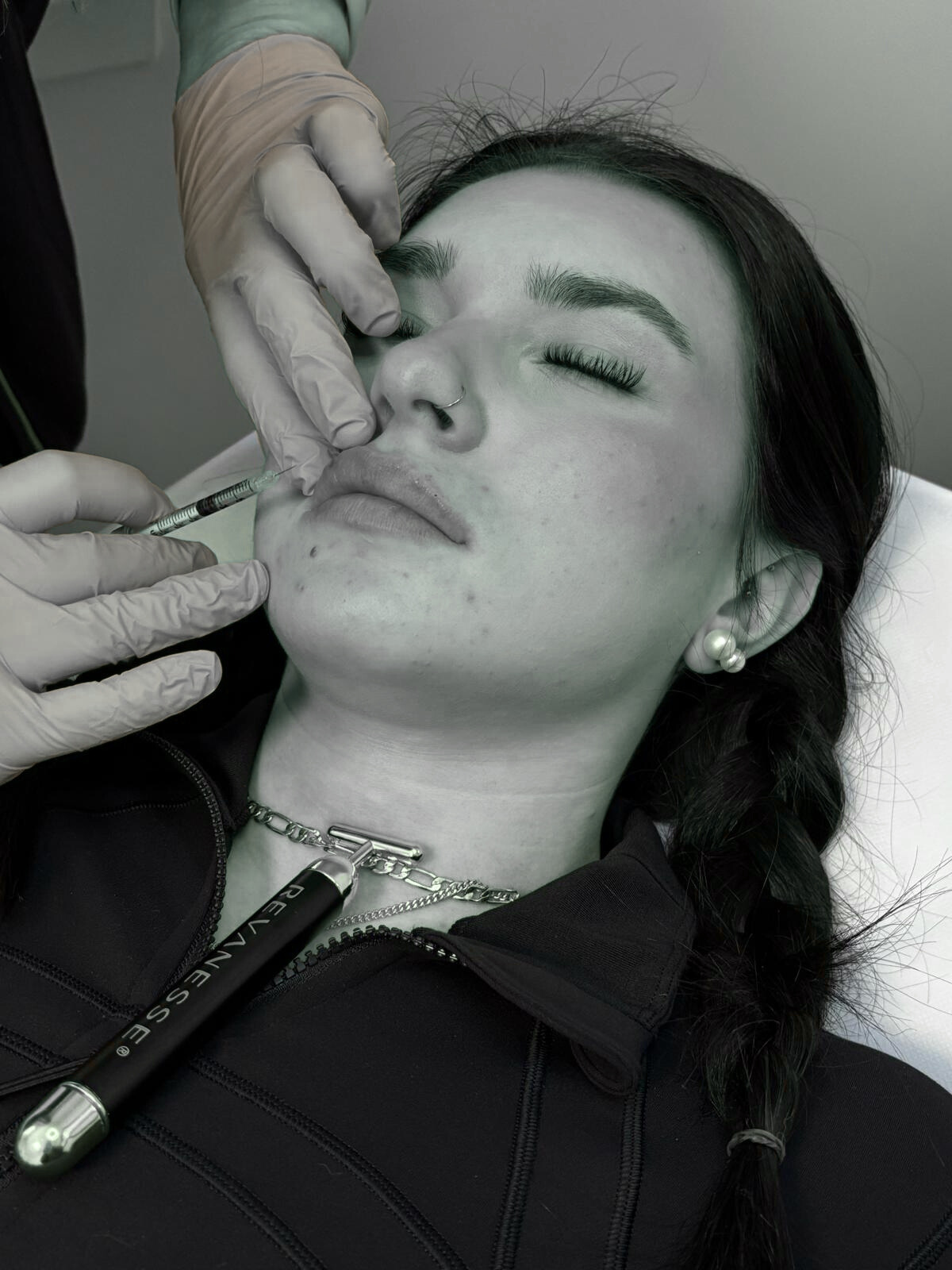
Jaw tension can affect far more than comfort. For some people, persistent clenching or grinding contributes to sore jaw muscles, morning headaches, facial tension, tooth wear, and a feeling that the lower face is constantly working harder than it should.
Across Barrhaven, as well as nearby Nepean and Kanata, more people are researching neuromodulator injections for TMJ symptoms and jaw clenching as a possible option when overactive jaw muscles are part of the problem.
Neuromodulators such as botulinum toxin type A work by temporarily reducing muscle activity. When injected into selected jaw muscles, particularly the masseter muscles, treatment may reduce muscular force and can also decrease masseter prominence over time. Research into botulinum toxin for temporomandibular disorders and bruxism continues to evolve, and it should not be presented as a universal or first-line solution for every case of jaw pain.
This guide explains what TMJ and TMD mean, how jaw clenching fits into the picture, how neuromodulator injections may help, what facial slimming actually means, what results and recovery may look like, and what patients in Barrhaven should understand before considering treatment.
What Does “TMJ” Actually Mean?
The temporomandibular joints, or TMJs, are the joints that connect the lower jaw to the skull.
They are involved every time someone:
- Chews
- Speaks
- Swallows
- Yawns
- Opens or closes the mouth
When people say they “have TMJ,” they usually mean they have a temporomandibular disorder, commonly abbreviated TMD.
The Canadian Dental Association explains that TMD can involve problems affecting the jaw joints, muscles, bones, or surrounding tissues and can cause pain in the jaw, face, head, neck, or shoulders.
That distinction matters because not every TMD is primarily caused by overactive muscles.
Common Symptoms Associated With TMD
Symptoms vary considerably from one person to another.
They may include:
- Jaw pain
- Jaw muscle tenderness
- Difficulty chewing
- Clicking or popping
- Limited jaw opening
- Facial discomfort
- Headaches
- Ear-area discomfort
- Neck or shoulder tension
- Pain that is worse when clenching or chewing
The Canadian Dental Association notes that sore or tender jaw muscles can become more painful when someone wakes, clenches the teeth, chews, or yawns.
Because symptoms can come from different causes, evaluation is important before choosing a treatment.
What Is Jaw Clenching?
Jaw clenching involves forcefully contracting the jaw muscles, often without realizing it.
Some people clench while awake.
Others grind or clench during sleep, a condition called sleep bruxism.
Repeated clenching can place substantial demands on the masseter and temporalis muscles.
Over time, this may contribute to:
- Jaw fatigue
- Muscle soreness
- Headaches
- Tooth wear
- Dental damage
- Increased muscle bulk
Sleep bruxism is specifically characterized by involuntary grinding or clenching during sleep and can contribute to TMD-related symptoms.
What Are the Masseter Muscles?
The masseters are powerful chewing muscles located on both sides of the lower face.
Someone can usually feel them contracting by placing a hand against the side of the jaw and clenching.
These muscles help generate the force needed to bite and chew.
When someone clenches frequently, the masseters may become:
- Overactive
- Tender
- Enlarged
- Fatigued
This is why the masseter is often one of the muscles considered when neuromodulator treatment is being evaluated for muscular jaw tension.
What Are Neuromodulator Injections?
Neuromodulators are injectable medications that reduce communication between nerves and targeted muscles.
Botulinum toxin type A products are the best known examples.
Health Canada explains that botulinum toxin works by reducing the ability of targeted muscles to contract. In cosmetic use, this mechanism is commonly used to soften facial wrinkles, but the same general muscle-relaxing principle is relevant when botulinum toxin is used therapeutically.
When appropriately injected into a jaw muscle, a neuromodulator can temporarily decrease the strength of that muscle’s contraction.
How Might Neuromodulators Help Jaw Clenching?
The concept is relatively straightforward.
If a patient is repeatedly overactivating the masseter muscles, reducing the strength of those contractions may decrease some of the muscular symptoms associated with clenching.
Potential effects can include:
- Less intense jaw contraction
- Reduced muscular tension
- Reduced tenderness
- Less jaw fatigue
- Improvement in some bruxism-related symptoms
A systematic review of botulinum toxin type A for sleep bruxism reported encouraging findings for pain and bruxism-related symptoms, while also emphasizing the need for more rigorous research and standardized protocols.
A 2026 systematic review focusing on myogenous TMD likewise found that botulinum toxin is increasingly investigated as an option for muscular TMD, but uncertainties remain regarding optimal dose and how long clinical benefits last.
Is Botulinum Toxin a Cure for TMJ Problems?
No.
This is one of the most important points for patients to understand.
TMD is not a single disease.
Jaw problems can involve:
- Muscle overactivity
- Joint inflammation
- Disc problems
- Arthritis
- Dental factors
- Trauma
- Structural abnormalities
- Behavioural clenching
- Several issues at once
Neuromodulators primarily affect muscle contraction.
They do not repair a damaged joint, reposition a displaced disc, correct dental wear, or eliminate every cause of jaw pain.
For someone whose symptoms are mainly muscular, neuromodulator treatment may be relevant.
For someone whose symptoms are primarily joint-based, another strategy may be more appropriate.
Neuromodulator Treatment vs Conservative TMJ Care
Conservative management remains important.
Depending on the individual, TMD or bruxism management may involve:
- Behavioural modification
- Stress management
- Jaw exercises
- Physiotherapy
- Dental assessment
- Occlusal splints
- Medication
- Avoiding habits that aggravate the jaw
A recent systematic review comparing occlusal splints with botulinum toxin for sleep bruxism found similar improvements in several clinical outcomes and concluded that splints remain preferred when preventing mechanical consequences and maintaining function are primary goals.
This means neuromodulators should not automatically replace conventional dental or TMD management.
They may instead be considered as one option within a broader treatment plan.
What About Awake Bruxism?
Not all clenching occurs during sleep.
Some people clench while:
- Working
- Driving
- Concentrating
- Exercising
- Feeling stressed
A 2025 randomized study compared botulinum toxin treatment with electromyography-based biofeedback for awake bruxism in people with TMD. Both approaches were being investigated for reducing bruxism behaviours and pain, highlighting that muscular jaw problems can sometimes benefit from behavioural as well as injectable strategies.
For someone who clenches during the day, becoming aware of the behaviour may be an important part of treatment.
How Do Masseter Injections Work?
During treatment, the provider identifies the relevant masseter anatomy and places small amounts of neuromodulator into selected portions of the muscle.
The objective is to reduce contraction strength without eliminating the patient’s ability to chew normally.
Precision matters.
The masseter sits near other facial structures and muscles that affect:
- Smiling
- Lip movement
- Facial expression
- Jaw function
Recent anatomical reviews emphasize the importance of careful injection mapping to reduce the risk of affecting nearby structures.
What Is Facial Slimming With Masseter Injections?
The cosmetic effect of masseter treatment is sometimes described as jaw slimming or lower-face slimming.
If the masseter muscles are enlarged, reducing their activity can gradually decrease muscle volume.
As the muscles become smaller, the lower face may appear:
- Narrower
- Less square
- More tapered
- More contoured
Research has shown that botulinum toxin can reduce masseter muscle prominence and volume in patients with masseter hypertrophy.
This effect is most relevant when facial width is actually caused by enlarged masseter muscles.
Will Neuromodulators Slim Everyone’s Jaw?
No.
Lower facial width can result from:
- Bone structure
- Facial fat
- Enlarged masseter muscles
- Skin laxity
- Natural genetics
Neuromodulators only directly reduce muscular activity.
If someone has a broad jaw because of bone structure rather than masseter hypertrophy, the cosmetic slimming effect may be limited.
A good consultation should therefore determine what is contributing to lower-face width before promising a slimmer jawline.
Functional Treatment vs Cosmetic Facial Slimming
A patient may pursue masseter treatment for:
Functional Reasons
Such as:
- Jaw tension
- Clenching
- Muscle soreness
Cosmetic Reasons
Such as:
- A square-looking jaw
- Enlarged masseter muscles
- Desire for a narrower lower face
Both
Some patients have muscular symptoms and also appreciate the gradual cosmetic change.
These goals should be discussed separately because the treatment strategy may differ.
When Do Results Begin?
Neuromodulator effects are not instant.
Patients may begin noticing reduced muscle activity over several days.
Muscular symptom improvement may then develop gradually.
The visible facial slimming effect usually takes longer because muscle size must decrease over time.
A person may therefore notice reduced clenching strength before they notice a significant change in facial shape.
How Long Does Treatment Last?
The duration varies.
Health Canada notes that cosmetic Botox effects commonly last around three to four months, although duration depends on treatment location and individual response.
For masseter treatment specifically, research suggests effects on muscle volume can persist longer in some patients, particularly with repeated treatment, but schedules and outcomes vary considerably.
Patients should not assume they will need exactly the same interval as someone receiving forehead Botox.
How Long Does Facial Slimming Take?
Facial contour changes are gradual.
The neuromodulator begins affecting muscle activity first.
Then, over time, reduced muscular workload can lead to decreased muscle bulk.
Visible changes may develop over several weeks and continue evolving over the following months.
This gradual timeline helps explain why masseter treatment does not create the same immediate contour change as a dermal filler.
Does Masseter Treatment Hurt?
Most patients experience brief discomfort from the injections.
Common sensations include:
- Pinching
- Pressure
- Mild tenderness
Treatment is typically short.
Individual pain tolerance varies.
Is There Downtime?
Most patients can return to normal daily activity soon after treatment.
Temporary effects can include:
- Tenderness
- Redness
- Mild swelling
- Bruising
The provider should give individualized aftercare instructions.
Potential Side Effects
Botulinum toxin treatment is generally well tolerated when appropriately administered, but side effects are possible.
Health Canada lists possible adverse effects from cosmetic botulinum toxin injections including:
- Injection-site pain or bruising
- Headache
- Local muscle weakness
- Drooping of nearby facial structures
- Swelling
- Allergic reactions
Rare systemic effects are also possible.
Masseter-specific treatment may also potentially affect chewing strength or nearby facial muscles if the product spreads beyond the intended area.
Can Chewing Become Weaker?
Because the masseter is a major chewing muscle, reducing its activity can affect bite force.
That is part of the treatment mechanism.
The objective should be to reduce excessive contraction without producing problematic weakness.
This is another reason dosing and placement should be individualized rather than copied from online treatment examples.
Can Masseter Injections Affect the Smile?
Potentially.
Nearby facial muscles contribute to smiling and lower-face expression.
Anatomical research emphasizes that incorrect placement or spread can affect structures outside the masseter.
An experienced injector who understands the anatomy of the lower face is therefore important.
Who May Be a Candidate?
Neuromodulator treatment may be considered for selected adults with concerns such as:
- Excessive jaw clenching
- Muscular jaw tension
- Masseter hypertrophy
- Certain cases of bruxism-related pain
- Desire for reduction in masseter prominence
A clinical assessment should determine whether the symptoms are actually muscular.
Who May Need a Different Treatment?
Someone may need another approach if the main problem involves:
- Joint locking
- Significant joint degeneration
- Disc displacement
- Dental damage
- Severe bite problems
- Trauma
- Infection
- Another medical condition
Jaw pain should not automatically be treated as a cosmetic problem.
What Happens During a Consultation?
A thoughtful consultation may assess:
- Where the pain occurs
- Whether symptoms are muscular or joint-related
- Clenching habits
- Grinding history
- Dental wear
- Jaw movement
- Masseter size
- Facial symmetry
- Previous treatment
Patients may be asked to clench so the provider can feel the masseter muscles contract.
The provider should also review medical history and medications.
What About Night Guards?
Night guards or occlusal splints may help protect the teeth and reduce some mechanical effects of bruxism.
They serve a different purpose from botulinum toxin.
A splint does not directly weaken the masseter muscle.
Neuromodulator treatment does not directly protect the teeth from grinding contact in the same way a properly designed dental appliance can.
For some people, the two strategies may address different parts of the same problem.
Neuromodulators for TMJ vs Botox for Wrinkles
The medication class may be similar, but the treatment objective is different.
Forehead Treatment
The goal is usually cosmetic wrinkle reduction.
Masseter Treatment
The goal may involve reducing:
- Clenching force
- Muscle tension
- Pain
- Muscle prominence
Because the muscles are much larger and serve different functions, dosing strategy and anatomy differ.
Is TMJ Botox Approved Specifically for TMD?
Patients should ask what indication is being treated and whether the proposed use is approved or off-label in their jurisdiction.
Botulinum toxin has multiple approved medical and cosmetic applications, but its use for certain TMD and bruxism presentations may be considered off-label.
Off-label treatment does not automatically mean inappropriate, but informed consent should include this distinction.
How Much Does TMJ Neuromodulator Treatment Cost in Barrhaven?
Pricing varies substantially because masseter treatment often requires more product than small cosmetic areas.
Total cost can depend on:
- Product used
- Dose
- One or both sides
- Muscle size
- Treatment purpose
- Practitioner fees
Patients should request an individualized quote after the provider evaluates their masseters.
A generic “per area” Botox price may not accurately reflect treatment for jaw clenching.
Is Facial Slimming Permanent?
No.
The medication’s effect is temporary.
If treatment is not repeated, normal muscle activity gradually returns.
Masseter size can also increase again over time if the muscle returns to its previous workload.
Repeated treatments may produce longer-lasting changes in muscle size for some patients, but permanent facial slimming should not be promised.
Frequently Asked Questions
Can neuromodulator injections help TMJ pain?
They may help some patients whose symptoms are primarily related to overactive jaw muscles. Evidence is encouraging but mixed, and treatment should not be considered a universal solution for all TMD.
Can Botox stop jaw clenching?
It can reduce the strength of muscle contraction, but it does not necessarily eliminate the behavioural or neurological tendency to clench.
Does treatment help teeth grinding?
Studies suggest botulinum toxin may reduce some symptoms and muscular consequences of sleep bruxism, although additional research is still needed.
Does masseter Botox slim the face?
It can reduce lower-face width when enlarged masseter muscles contribute to the facial shape.
How long does facial slimming take?
Visible changes usually develop gradually over several weeks as muscle bulk decreases.
How long do results last?
Neuromodulator effects are temporary. Many botulinum toxin effects last several months, although masseter treatment duration varies.
Can chewing become weaker?
Yes. Reduced muscle strength is part of the treatment mechanism, so excessive dosing can create unwanted chewing weakness.
Is there downtime?
Usually minimal, although temporary tenderness, redness, bruising, or swelling may occur.
Is masseter treatment only cosmetic?
No. It may be used for muscular symptoms such as clenching or jaw tension as well as for reduction of masseter prominence.
Does it replace a night guard?
Not necessarily. Splints and neuromodulator injections address different aspects of bruxism, and current evidence supports conservative options such as splints in appropriate patients.
Is every case of TMJ pain caused by tight muscles?
No. TMD can involve muscles, joints, discs, bones, or several structures simultaneously.
Final Thoughts: Are Neuromodulator Injections for TMJ Worth Considering in Barrhaven?
For selected patients with jaw clenching, muscular tension, bruxism-related discomfort, or enlarged masseter muscles, neuromodulator injections may offer a useful way to temporarily reduce the strength of overactive jaw muscles.
Research increasingly supports the possibility of symptom improvement in muscular TMD and bruxism, but the evidence does not justify treating botulinum toxin as a universal cure for jaw disorders. Recent systematic reviews continue to identify uncertainty around ideal dosing, treatment duration, and how botulinum toxin compares with established conservative treatments.
The cosmetic effect is also real but specific.
If a person’s lower face appears broad because their masseter muscles are enlarged, reducing those muscles can gradually produce a slimmer or more tapered appearance. Clinical research has demonstrated reductions in masseter muscle volume and prominence following botulinum toxin treatment.
For individuals in Barrhaven, with nearby Nepean and Kanata forming part of the surrounding service area, the best first step is therefore an appropriate assessment of what is actually causing the symptoms.
If the primary issue is muscular overactivity, neuromodulator injections may deserve consideration. If the problem comes from the joint, dental structures, disc, or another medical cause, a different treatment strategy may be necessary.
The strongest results come from treating the diagnosis rather than simply treating the location of the pain.