
As skin ages, changes in collagen, elasticity, hydration, and texture can become more noticeable. Fine lines may linger longer, pores can appear more visible, old acne scars may seem more pronounced, and the skin may lose some of the smoothness and firmness it once had.
Microneedling is one treatment often considered for these concerns.
Rather than adding volume or temporarily relaxing facial muscles, microneedling works by creating controlled micro-injuries in the skin. These tiny channels trigger a natural wound-healing response that involves tissue repair and collagen remodeling.
That makes microneedling especially interesting for people who want to improve skin quality, texture, fine lines, and overall rejuvenation without necessarily changing facial shape or expression.
But what does microneedling actually do? How long does it take to see results? Does it hurt? And is it suitable for aging skin?
Here is what to expect.
What Is Microneedling?
Microneedling is a minimally invasive procedure that uses very fine needles to create controlled microchannels in the skin.
These micro-injuries are intentional and carefully managed. They are designed to stimulate the skin’s natural repair process.
During healing, the skin activates biological pathways involved in tissue remodeling, including processes associated with collagen and extracellular matrix production.
That is why microneedling is often described as a collagen-stimulating treatment.
The goal is not to injure the skin aggressively. The goal is to create a controlled response that encourages gradual improvement in skin quality.
Why Is Microneedling Used for Aging Skin?
Visible skin aging involves several changes happening at once.
These can include:
- Fine lines
- Reduced firmness
- Uneven texture
- Enlarged-looking pores
- Dullness
- Mild acne scarring
- Changes in skin tone
- Reduced elasticity
- Roughness
- Crepey-looking skin
Microneedling may be considered when the main concern is the quality and texture of the skin itself.
It is not a direct replacement for treatments designed to address facial volume loss, muscle-related wrinkles, or deeper structural changes.
That distinction matters.
Someone with mild fine lines and uneven texture may be a good candidate for microneedling, while someone whose main concern is significant volume loss may need a completely different treatment plan.
How Does Microneedling Work?
The treatment creates microscopic channels in the skin using a professional microneedling device.
The depth can be adjusted depending on the area being treated, the concern, the skin type, and the treatment plan.
These controlled micro-injuries trigger a wound-healing response.
That response involves several stages, including inflammatory signaling, tissue repair, and collagen remodeling.
Over time, this can help improve the appearance of the skin.
The results are not immediate because collagen remodeling does not happen overnight.
The process continues after the skin has visibly healed.
Can Microneedling Stimulate Collagen?
Microneedling is widely used because controlled skin injury can stimulate processes associated with collagen production and remodeling.
Collagen is one of the major structural proteins in the skin.
As we age, collagen production and organization change. That can contribute to thinner-looking skin, reduced firmness, and more visible lines.
Microneedling does not restore the skin to a younger biological age, but it may support a remodeling response that improves the appearance of certain age-related skin concerns.
Results vary depending on age, skin condition, treatment depth, number of sessions, lifestyle, and individual healing response.
What Are the Main Benefits of Microneedling for Aging Skin?
Microneedling may offer several potential benefits when used appropriately.
Smoother Skin Texture
One of the most common reasons people choose microneedling is to improve uneven or rough texture.
As the skin heals and remodels, the surface may gradually appear smoother.
This can help the skin reflect light more evenly, which may also contribute to a fresher-looking complexion.
Softening the Appearance of Fine Lines
Microneedling may help improve the appearance of certain fine lines by stimulating remodeling in the treated skin.
It is especially important to distinguish fine textural lines from deeper wrinkles caused by muscle movement, volume loss, or structural changes.
Microneedling may improve skin quality, but it does not treat every type of wrinkle in the same way.
Improving the Appearance of Acne Scars
Microneedling is also commonly used for selected types of acne scarring.
By triggering controlled remodeling, it may help improve the appearance of certain atrophic scars over time.
However, acne scars vary significantly in type and depth.
Ice-pick scars, rolling scars, boxcar scars, and post-inflammatory pigmentation may each respond differently.
A professional assessment is important before choosing treatment.
Reducing the Appearance of Enlarged Pores
Pore size is influenced by genetics, oil production, skin structure, and other factors.
Microneedling cannot permanently eliminate pores, but improving surrounding skin texture and firmness may make pores appear less noticeable.
Supporting Overall Skin Rejuvenation
Some people pursue microneedling not because of one specific concern, but because they want their skin to look healthier, smoother, and more refreshed.
That is where microneedling can fit naturally into a broader anti-aging plan.
What Microneedling Does Not Do
Microneedling has real uses, but it is not a universal anti-aging treatment.
It does not:
- Permanently stop aging
- Replace significant facial volume
- Relax expression muscles
- Remove every wrinkle
- Eliminate pigmentation in every case
- Create instant results
- Guarantee collagen growth for everyone
This is why a good treatment plan begins with identifying what is actually causing the concern.
If your main concern is volume loss, filler may be more relevant.
If your concern is dynamic expression lines, a neuromodulator may be more direct.
If pigmentation is the main issue, another treatment approach may be more appropriate.
What Does a Microneedling Appointment Feel Like?
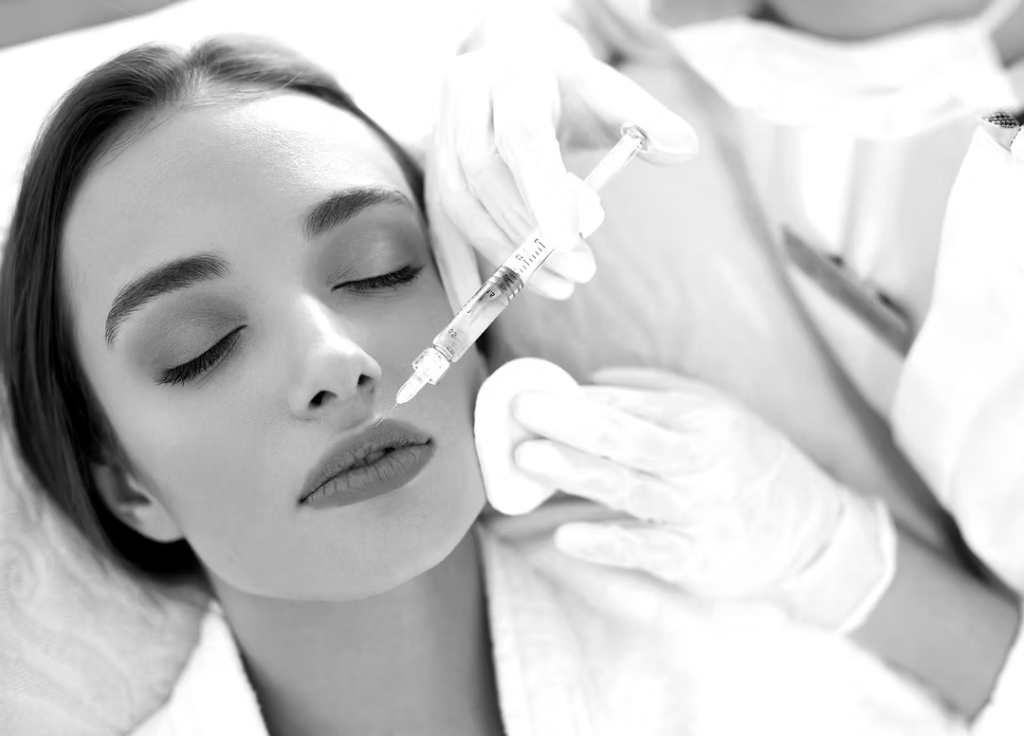
A professional microneedling treatment usually begins with cleansing and preparing the skin.
Depending on the treatment protocol, a topical numbing cream may be applied beforehand to improve comfort.
The microneedling device is then passed over the treatment area.
Most people describe the sensation as:
- Prickling
- Vibration
- Scratching
- Pressure
- Mild heat or sensitivity
Certain areas may feel more sensitive than others, particularly around the forehead, upper lip, or bony areas.
Treatment time varies depending on the area and protocol.
Does Microneedling Hurt?
Comfort varies from person to person.
With appropriate numbing and professional technique, many patients find the treatment tolerable.
However, microneedling is not completely sensation-free.
The treatment creates controlled skin injury, so some discomfort is expected.
If a treatment is being performed very aggressively, deeper depths may result in more discomfort and more downtime.
More intense does not automatically mean better.
Treatment depth should be selected according to the concern and the area being treated.
What Does Skin Look Like Immediately After Microneedling?
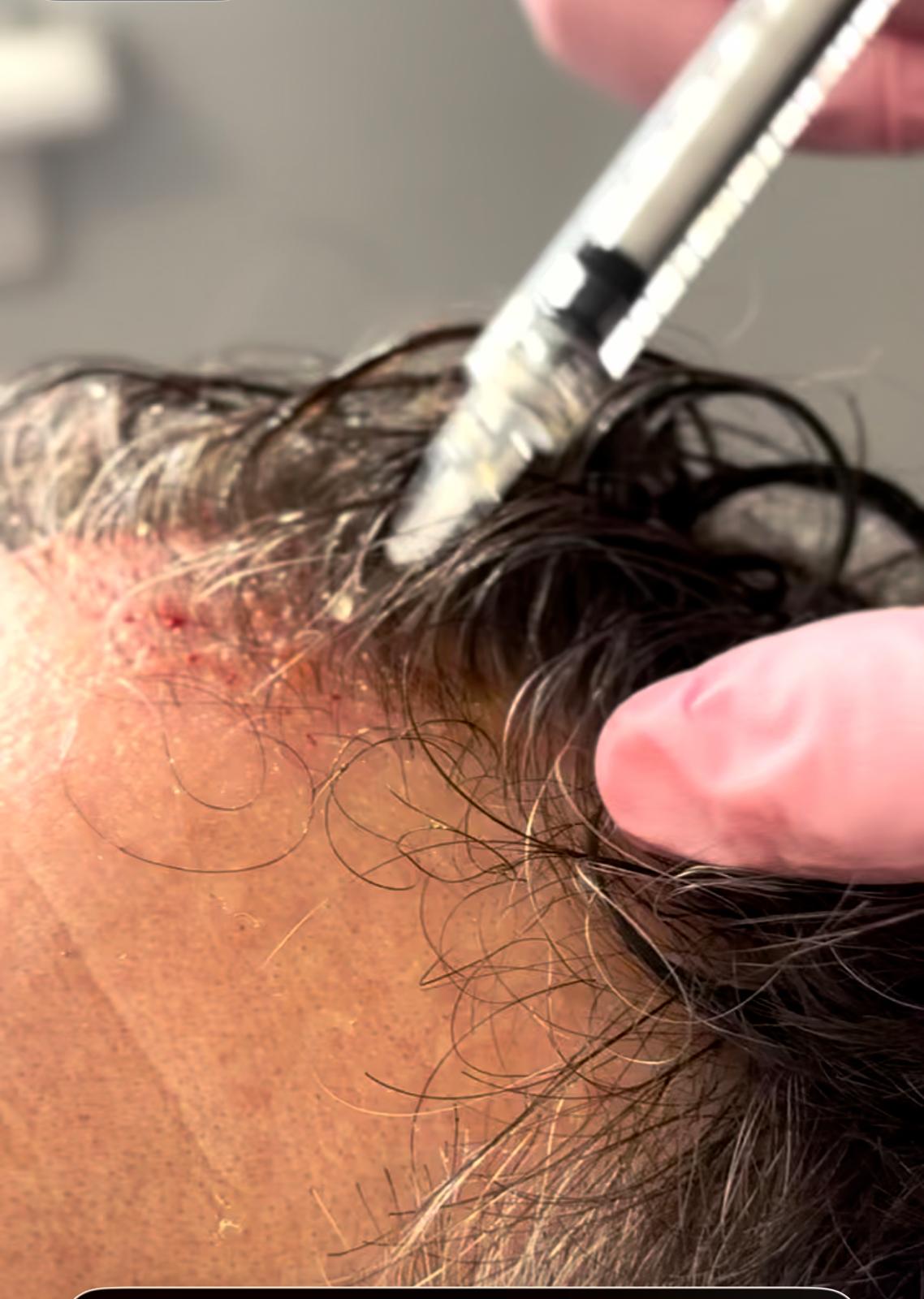
Redness is common after treatment.
The skin may look similar to a mild or moderate sunburn depending on treatment intensity.
You may also experience:
- Warmth
- Tightness
- Mild swelling
- Sensitivity
- Pinpoint bleeding
- Dryness
- Mild flaking
These effects usually improve as the skin heals.
The exact recovery period depends on treatment depth, skin type, products used, and individual healing response.
How Long Is the Downtime?
For many people, visible redness may be most noticeable during the first 24 to 48 hours.
Some patients may remain pink or sensitive for several days.
Dryness or light flaking can also occur.
Deeper treatments may require a longer recovery period.
During this time, gentle aftercare is important.
The skin barrier is temporarily more vulnerable after microneedling, so harsh products should generally be avoided until the skin has recovered.
What Should You Avoid After Microneedling?
Your provider may give specific aftercare instructions, but common recommendations can include temporarily avoiding:
- Retinoids
- Strong exfoliating acids
- Scrubs
- Harsh cleansers
- Fragranced products
- Excessive heat
- Saunas
- Intense exercise immediately after treatment
- Unnecessary sun exposure
- Picking or peeling the skin
Sun protection is especially important after treatment.
Freshly treated skin should be protected carefully from UV exposure.
What Should You Use After Microneedling?
Aftercare should generally focus on keeping the skin calm and supported.
A simple routine may include:
- Gentle cleansing
- Hydrating products
- Barrier-supporting moisturizer
- Broad-spectrum sunscreen once appropriate
The exact products depend on your provider’s instructions and the treatment protocol.
It is usually not the time to experiment with several new active ingredients.
The skin needs to heal.
When Will You See Results?
Microneedling results develop gradually.
Some people may notice early improvements in texture or radiance once the initial redness settles.
More meaningful changes associated with collagen remodeling can take several weeks or longer.
The remodeling process can continue for months after treatment.
This is one reason before-and-after photos taken immediately after microneedling can be misleading.
Temporary swelling and hydration may make skin look different right away, but that is not the same as the final result.
How Many Microneedling Treatments Do You Need?
There is no universal number.
Some people may benefit from a series of treatments spaced several weeks apart.
The number of sessions depends on:
- The concern being treated
- Skin condition
- Treatment depth
- Age
- Scar type
- Desired outcome
- Individual response
- Tolerance for downtime
For general skin rejuvenation, a shorter series may be considered.
For more established acne scarring or textural concerns, a longer treatment plan may be needed.
Your progress should be reassessed rather than assuming everyone needs the same package.
How Often Can You Have Microneedling?
Microneedling treatments need to be spaced appropriately so the skin has time to heal and remodel.
Treatment frequency depends on intensity and the concern being treated.
More frequent treatment is not automatically more effective.
Performing another session before the skin has recovered can increase irritation and may interfere with healthy healing.
The schedule should be determined by the provider performing the treatment.
Microneedling in Your 30s
In your 30s, microneedling may be considered for concerns such as:
- Early fine lines
- Uneven texture
- Mild acne scarring
- Enlarged-looking pores
- Early photoaging
- General skin rejuvenation
At this stage, the goal is often maintenance and early correction rather than aggressive anti-aging treatment.
Sun protection and consistent skincare should still remain the foundation.
Microneedling in Your 40s
During the 40s, changes in skin texture and firmness may become more visible.
Microneedling may be considered when the goal is to improve:
- Fine lines
- Skin texture
- Mild laxity
- Acne scarring
- Overall skin quality
- Early crepey texture
At this stage, microneedling may also be combined with other approaches depending on the concern.
That could include regenerative treatments, injectables, or targeted skincare.
A combination plan should be strategic rather than simply stacking procedures.
Microneedling in Your 50s and Beyond
Microneedling can still be considered in the 50s and beyond, but treatment planning becomes even more individualized.
Skin may be drier, thinner, or more sensitive due to hormonal and age-related changes.
A provider may need to adjust treatment depth, frequency, and aftercare accordingly.
The main priorities may include:
- Improving texture
- Supporting skin quality
- Reducing the appearance of fine lines
- Improving crepey-looking skin
- Supporting overall rejuvenation
Again, microneedling cannot correct every age-related facial change.
It may be one part of a broader treatment strategy.
Microneedling With PRP
Microneedling is sometimes combined with platelet-rich plasma (PRP).
PRP is prepared from a sample of the patient’s own blood.
The blood is processed to concentrate platelets within plasma.
Platelets contain proteins and signaling molecules involved in normal healing processes.
Some treatment protocols combine PRP with microneedling in an effort to support skin rejuvenation and the natural healing response.
Whether this combination is appropriate depends on the individual, the treatment protocol, and the concern being addressed.
Microneedling With PRF
Platelet-rich fibrin (PRF) is another blood-derived regenerative preparation.
Like PRP, it is created from the patient’s own blood, but different processing methods produce a fibrin-based matrix containing platelets and other blood components.
PRF may also be considered within selected regenerative treatment plans.
PRF and PRP are not interchangeable, and neither is automatically superior.
The appropriate approach depends on what the provider is trying to achieve.
Microneedling With Exosomes
Exosome-based products have become increasingly visible within regenerative aesthetics.
Exosomes are extracellular vesicles involved in cellular communication.
Research is exploring their potential role in tissue repair and regenerative processes.
Some aesthetic providers combine exosome-based products with microneedling.
Because microneedling temporarily disrupts the skin barrier, the source, sterility, intended use, formulation, evidence, and regulatory status of any product used immediately after treatment are important considerations.
This is an area where marketing claims should be evaluated carefully.
An emerging technology should not automatically be assumed to improve results simply because it is new.
Microneedling vs. Chemical Peels
Microneedling and chemical peels can both be used for skin rejuvenation, but they work differently.
Microneedling creates controlled micro-injuries using needles.
Chemical peels use chemical solutions to create controlled exfoliation at different depths.
A chemical peel may be more appropriate for certain pigmentation or surface concerns.
Microneedling may be more appropriate for selected textural or scar-related concerns.
Some patients may benefit from both at different times.
The correct choice depends on your skin and the issue being treated.
Microneedling vs. Laser Treatments
Laser and energy-based treatments can also target skin texture, pigmentation, and signs of aging.
They work through different mechanisms and can vary greatly in intensity.
Some laser procedures offer more aggressive resurfacing and potentially greater downtime.
Microneedling may appeal to patients looking for a more gradual approach, but it is not necessarily better or safer for every skin type or concern.
An appropriate consultation helps determine which modality makes sense.
Microneedling vs. Botox
These treatments do very different things.
Neuromodulators such as Botox are generally used to reduce activity in selected facial muscles, helping soften certain dynamic expression lines.
Microneedling focuses more on skin texture and remodeling.
If your concern is a forehead line caused primarily by repeated muscle movement, microneedling may not be the most direct treatment.
If your concern is uneven texture or acne scarring, a neuromodulator will not address the problem.
Understanding the cause of the concern is essential.
Microneedling vs. Fillers
Dermal fillers are typically used to address volume and structural changes.
Microneedling does not replace volume.
If the face appears hollow because of age-related changes in fat compartments or facial structure, stimulating collagen in the skin may not fully correct the concern.
However, microneedling and fillers may complement one another because they target different aspects of aging.
One addresses skin quality.
The other may address volume or support.
Is Microneedling Safe for All Skin Types?
Microneedling can be appropriate for many skin types, but not everyone is a candidate.
Factors that may influence suitability include:
- Active acne
- Active infection
- Certain inflammatory skin conditions
- Poor wound healing
- A history of abnormal scarring
- Certain medications
- Recent procedures
- Pregnancy
- Underlying medical conditions
People with darker skin tones may also require careful treatment planning to reduce the risk of post-inflammatory pigment changes.
Professional assessment is important.
Can Microneedling Make Skin Worse?
When performed incorrectly, too aggressively, too frequently, or on inappropriate skin, microneedling can cause problems.
Potential complications can include:
- Prolonged redness
- Irritation
- Infection
- Pigmentation changes
- Scarring
- Persistent inflammation
- Delayed healing
Home microneedling devices can also create risks, particularly if used at excessive depths or without appropriate hygiene.
Professional devices and protocols are designed to create controlled treatment conditions.
More trauma is not better.
What About At-Home Microneedling?
At-home rollers and stamping devices are widely available.
They are often marketed as inexpensive alternatives to professional treatment.
The main problems involve depth, hygiene, consistency, and misuse.
At-home devices may cause:
- Irritation
- Infection
- Pigmentation
- Uneven injury
- Scarring
- Barrier damage
Professional microneedling allows the provider to control needle depth and adjust treatment according to the area.
If your goal is meaningful treatment of acne scarring, fine lines, or age-related texture, professional assessment is generally more appropriate than repeatedly needling your skin at home.
How to Prepare for Microneedling
Preparation varies according to the treatment plan.
Your provider may recommend adjusting certain products or treatments before the appointment.
This might include temporarily stopping strong retinoids or exfoliating products.
You should also disclose:
- Prescription medications
- Supplements
- Blood-thinning medications
- Skin conditions
- Recent procedures
- History of cold sores
- Pregnancy
- Previous abnormal scarring
Do not stop prescribed medications without discussing it with the appropriate healthcare professional.
How to Get the Best Results From Microneedling
The treatment itself is only one part of the process.
Good results also depend on what happens between appointments.
Important factors include:
Sun Protection
UV exposure contributes to photoaging and pigmentation.
Protecting the skin after treatment is essential.
Consistent Skincare
A simple, appropriate routine can support the skin between procedures.
Avoiding Smoking
Smoking is associated with premature skin aging and can negatively affect healing processes.
Adequate Nutrition
The body needs sufficient protein and nutrients to support normal tissue repair.
Following Aftercare
Avoiding irritating products and unnecessary sun exposure during healing can reduce complications.
How Long Do Microneedling Results Last?
There is no fixed expiration date.
Results vary based on:
- Age
- Skin condition
- Number of treatments
- Treatment depth
- Lifestyle
- Sun exposure
- Skincare habits
- Individual biology
Skin also continues to age after treatment.
That means maintenance may be considered over time depending on your goals.
The objective is not permanent freezing of the skin.
It is gradual improvement and ongoing support.
Is Microneedling Worth It for Aging Skin?
For the right patient and the right concern, microneedling can be a useful option.
It may be particularly appealing if you want to focus on:
- Skin texture
- Fine lines
- Mild scarring
- Pore appearance
- Overall skin quality
- Gradual rejuvenation
It is less appropriate when the primary concern is significant facial volume loss or something that requires a different treatment modality.
The best way to know is to start with an assessment.
Microneedling at Rejovenation
At Rejovenation in Stittsville, microneedling and skin rejuvenation treatments are approached according to the individual.
Your age, skin type, pigmentation, texture, medical history, previous treatments, and goals can all affect whether microneedling is appropriate.
Depending on your assessment, a treatment plan may also explore options involving PRP, PRF, regenerative aesthetics, injectables, AI skin analysis, or other skin rejuvenation services.
The goal is to choose treatments based on what your skin actually needs rather than automatically following trends.
Rejovenation welcomes clients from Stittsville, Kanata, Nepean, Barrhaven, Ottawa, and surrounding communities.
Frequently Asked Questions About Microneedling
Is microneedling good for aging skin?
Microneedling may be helpful for certain age-related concerns such as fine lines, uneven texture, mild scarring, and overall skin quality. It works by creating controlled micro-injuries that stimulate a natural remodeling response.
How long does it take to see microneedling results?
Some early improvements may be noticed after initial redness resolves, but collagen remodeling develops gradually. More meaningful changes may become visible over several weeks or months.
How many microneedling sessions do I need?
The number of sessions depends on the concern, treatment depth, age, skin condition, and individual response. Some people may benefit from a series of treatments.
Does microneedling hurt?
Microneedling can cause discomfort, but topical numbing may be used to improve comfort. Sensation varies depending on treatment depth and the area being treated.
How long does redness last after microneedling?
Redness is often most noticeable during the first 24 to 48 hours, although some people may remain pink or sensitive for several days.
Can microneedling help wrinkles?
Microneedling may improve the appearance of certain fine lines by supporting skin remodeling. Deeper wrinkles caused by muscle movement or structural changes may require different treatments.
Can microneedling tighten loose skin?
Microneedling may improve skin quality and mild firmness concerns in some patients, but it should not be expected to produce the same result as procedures specifically designed for significant skin laxity.
Is microneedling better than Botox?
Neither is universally better because they treat different concerns. Botox and other neuromodulators target selected muscle activity, while microneedling focuses more on skin quality, texture, and remodeling.
Can microneedling be combined with PRP or PRF?
Yes, blood-derived regenerative preparations such as PRP or PRF may be incorporated into selected microneedling treatment plans when appropriate. The combination should be chosen based on the individual and treatment objective.
Where can I get microneedling near Ottawa?
Rejovenation is located at 1563 Stittsville Main Street in Stittsville, Ontario, serving clients from Stittsville, Kanata, Nepean, Barrhaven, Ottawa, and surrounding areas. A consultation can help determine whether microneedling is suitable for your skin and goals.
Ready to Explore Microneedling for Your Skin?
Microneedling can be a valuable option for people who want to improve fine lines, texture, mild scarring, pore appearance, and overall skin quality.
But the best results come from treating the right concern, using the right intensity, and allowing the skin enough time to heal and remodel.
If you are considering microneedling for aging skin, book a consultation with Rejovenation in Stittsville to discuss your skin, your goals, and whether microneedling or another rejuvenation approach may be appropriate.