

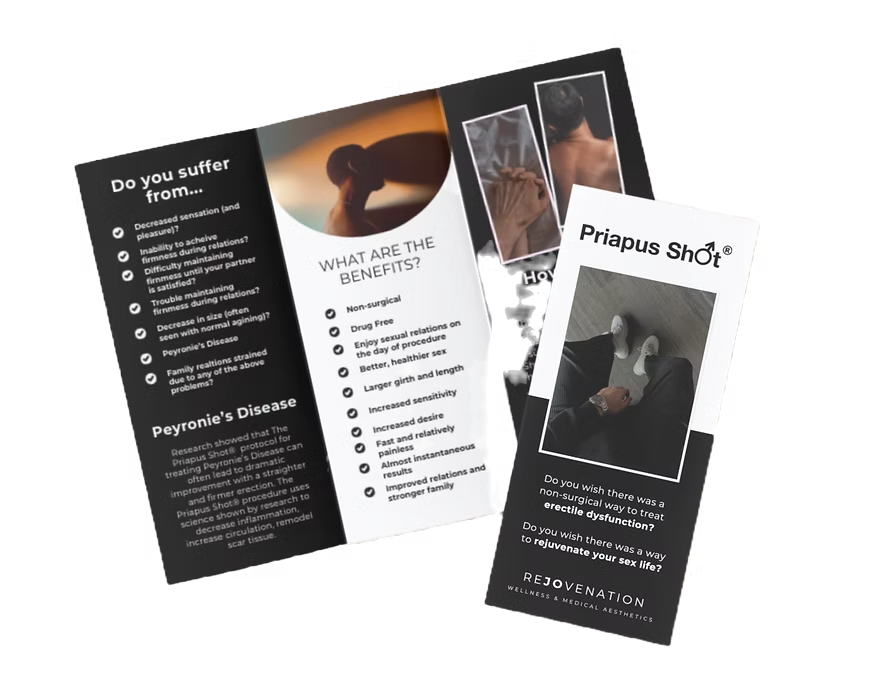
Men’s sexual wellness is an important part of overall health, yet concerns about erectile function, sexual confidence, and changes in intimate performance are not always easy to discuss. Many men prefer to explore discreet, non-surgical options before considering more invasive procedures.
For men in Kanata, Nepean, Barrhaven, and surrounding Ottawa communities, one treatment attracting attention is the P-Shot, also known as the Priapus Shot.
The P-Shot uses platelet-rich plasma (PRP), prepared from a patient’s own blood, and involves injecting it into selected penile tissues. The treatment is promoted as a regenerative approach to male sexual wellness, particularly for concerns related to erectile function.
However, it is important to distinguish the treatment’s proposed benefits from those established through clinical research. While PRP has been studied in several medical fields, penile PRP injections remain investigational for erectile dysfunction, and the evidence is not strong enough to guarantee improved erections, increased sensitivity, or enhanced sexual performance.
This guide explains how P-Shot treatment works, the benefits being investigated, typical treatment costs, recovery time, possible side effects, and what men in Kanata should know before booking a consultation.
What Is the P-Shot?
The P-Shot is a procedure involving injections of platelet-rich plasma (PRP) into penile tissue.
PRP is produced by collecting a small sample of the patient’s blood and processing it to concentrate platelets in a portion of the plasma.
Platelets are best known for their role in blood clotting, but they also contain signaling molecules involved in tissue repair and healing.
The theory behind the P-Shot is that delivering concentrated platelets into selected tissues may influence biological processes associated with tissue health and vascular function.
Researchers have investigated whether these processes could contribute to improvements in erectile function.
However, this biological theory should not be confused with proof that the treatment reliably works for every patient.
According to the Sexual Medicine Society of North America, restorative treatments such as PRP for erectile dysfunction require further investigation and should be approached cautiously because evidence remains limited.
How Does the P-Shot Work?
P-Shot treatment typically involves several stages.
1. Initial Consultation
Before treatment, a healthcare professional should review the patient’s sexual health concerns, medical history, medications, and treatment expectations.
This assessment is important because erectile dysfunction can have several underlying causes.
2. Blood Collection
A small blood sample is collected from the patient.
The amount required depends on the PRP preparation system.
3. PRP Preparation
The blood sample is placed in a centrifuge, which separates blood components according to their density.
This allows the provider to prepare a plasma fraction containing a higher concentration of platelets.
4. Preparation of the Treatment Area
The treatment area is cleaned, and a local or topical anesthetic may be used to reduce discomfort.
5. PRP Injections
The prepared PRP is injected into selected penile tissues according to the provider’s protocol.
There is no universally accepted injection protocol for erectile dysfunction, which is one reason treatment outcomes are difficult to compare across studies.
6. Aftercare
Patients receive instructions about hygiene, sexual activity, physical exercise, and symptoms that should prompt medical attention.
The appointment may be relatively short, but patients should allow time for consultation, preparation, treatment, and observation.
What Are the Potential Benefits of P-Shot Treatment?
Men researching P-Shot treatment in Kanata often encounter several advertised benefits.
These may include:
- Improved erectile function
- Better erection firmness
- Improved sexual confidence
- Support for penile tissue health
- Potential improvement in certain sexual wellness concerns
- A non-surgical treatment experience
These are potential or marketed benefits, not guaranteed outcomes.
The most relevant clinical research has focused on erectile dysfunction. Studies have explored whether penile PRP injections can improve standardized erectile-function scores, but findings remain inconsistent and the overall evidence is limited.
The P-Shot should not be advertised as a proven cure for erectile dysfunction, a guaranteed way to increase penis size, or a reliable method of permanently improving sexual performance.
P-Shot for Erectile Dysfunction
Erectile dysfunction, commonly called ED, occurs when a man has persistent difficulty achieving or maintaining an erection sufficient for satisfactory sexual activity.
ED becomes more common with age, but it is not simply an unavoidable consequence of getting older.
Potential contributing factors include:
- Cardiovascular disease
- Diabetes
- High blood pressure
- Medication effects
- Hormonal changes
- Anxiety
- Depression
- Stress
- Sleep problems
- Smoking
- Neurological conditions
- Relationship difficulties
The National Institute of Diabetes and Digestive and Kidney Diseases explains that erectile dysfunction can have physical and psychological causes and that treatment depends on identifying the contributing factors.
This matters because PRP injections do not address every possible cause of ED.
For example, a man experiencing erectile difficulties because of medication side effects may need a different approach from someone with vascular disease or significant performance anxiety.
Can PRP Improve Erectile Function?
Some early clinical studies have reported improvements in erectile-function measures following penile PRP injections.
However, other research has not demonstrated a clear advantage over placebo.
Studies have also differed in:
- PRP preparation
- Platelet concentration
- Injection technique
- Number of sessions
- Patient selection
- Follow-up duration
These differences make it difficult to establish a standard treatment protocol or predict results.
Men should understand that penile PRP remains an emerging intervention rather than an established first-line ED treatment.
Is the P-Shot a Natural Treatment?
The P-Shot is often described as a natural or autologous treatment because the PRP is prepared from the patient’s own blood.
That description is partly accurate.
Unlike a manufactured dermal filler, PRP uses biological material collected from the individual receiving treatment.
However, using the patient’s own blood does not make the procedure risk-free.
Blood collection, processing, and injection still require appropriate infection prevention, sterile technique, and clinical judgment.
Patients should also understand that PRP is not the same as stem-cell therapy.
PRP contains concentrated platelets and plasma components. It does not involve injecting newly created stem cells into the penis.
Can the P-Shot Increase Penis Size?
Penile enlargement is one of the most misleading claims sometimes associated with P-Shot marketing.
There is insufficient reliable clinical evidence that PRP injections consistently increase penile length or girth.
Some men may perceive changes related to erection quality, but that does not establish permanent anatomical enlargement.
A responsible provider should avoid promising measurable size increases from P-Shot treatment.
Patients whose main goal is penile enlargement should discuss realistic expectations with a qualified medical professional before proceeding.
Can the P-Shot Improve Sexual Sensitivity?
Some promotional material suggests that PRP injections may improve penile sensitivity.
However, high-quality evidence supporting predictable improvements in sexual sensation remains insufficient.
Sexual sensitivity depends on several factors, including:
- Nerve function
- Circulation
- Hormonal health
- Medication use
- Psychological factors
- Existing medical conditions
Because these factors vary, improvements in sensation cannot be guaranteed.
Who May Be Interested in P-Shot Treatment?
Men considering a P-Shot may include those who:
- Have concerns about erectile function
- Are exploring non-surgical sexual wellness procedures
- Want to learn about regenerative medicine
- Prefer a consultation before considering more invasive options
- Understand that the treatment remains investigational
However, interest in the procedure does not automatically mean someone is an appropriate candidate.
A qualified clinician should first evaluate the underlying problem and discuss established treatment options.
Who Should Be Cautious About P-Shot Treatment?
Additional assessment may be necessary for men with:
- Active infection
- Blood-clotting disorders
- Certain blood conditions
- Uncontrolled diabetes
- Significant cardiovascular disease
- Penile skin conditions
- A history of abnormal bleeding
- Medications that affect bleeding or clotting
A healthcare professional should determine whether the treatment is appropriate based on the patient’s medical history.
Men should not discontinue prescribed medications, including blood thinners, without guidance from the prescribing clinician.
How Much Does P-Shot Treatment Cost in Kanata?
Cost is one of the most common questions asked by men researching P-Shot treatment near Kanata.
There is no universal price for penile PRP injections.
As a broad planning estimate, elective P-Shot treatments in the North American private market are often advertised in the range of approximately $1,000 to $2,500 or more per session.
This is not a verified price for Rejovenation or a confirmed Kanata market rate. Actual Canadian pricing may differ substantially.
Factors affecting cost can include:
- Medical consultation
- PRP preparation equipment
- Treatment complexity
- Provider qualifications
- Number of sessions
- Follow-up appointments
- Additional recommended care
Patients should obtain an individualized written quote before proceeding.
Is P-Shot Covered by Insurance?
Because penile PRP for erectile dysfunction is generally considered investigational, patients should not assume that private insurance or provincial health coverage will pay for it.
Coverage depends on the insurer, indication, and policy.
The clinic and insurance provider should confirm any applicable coverage before treatment.
How Many P-Shot Sessions Are Needed?
There is no established universal treatment schedule.
Some providers offer a single session, while others recommend multiple treatments.
However, recommendations for repeated sessions should be supported by a clear explanation of the evidence, expected benefit, cost, and uncertainty.
Because PRP protocols differ widely across studies, no specific number of sessions can be guaranteed to produce improvement.
What Is the Recovery Time After a P-Shot?
P-Shot treatment is generally described as a minimally invasive outpatient procedure.
Many patients can return to ordinary non-strenuous activities relatively soon afterward, but recovery varies.
Possible short-term effects include:
- Mild soreness
- Temporary swelling
- Small bruises
- Tenderness around injection sites
- Minor bleeding
- Temporary sensitivity
Patients should follow the treating clinician’s aftercare instructions.
Although the procedure does not involve major surgery, that does not mean there is zero recovery time or zero risk.
How Long Should Patients Avoid Sexual Activity?
There is no universally validated abstinence period after penile PRP injections.
Different providers may give different instructions based on the injection technique, tissue response, and any complications.
Patients should ask their clinician when it is appropriate to resume:
- Sexual intercourse
- Masturbation
- Strenuous exercise
- Cycling
- Other activities that place pressure on the treated area
If pain, swelling, or bruising persists, patients should not resume activities simply because a generic online timeline has passed.
Does the P-Shot Hurt?
Discomfort varies from person to person.
The procedure involves blood collection and injections into sensitive tissue.
Providers may use a topical or local anesthetic to reduce pain.
Patients may experience:
- Pressure
- Pinching
- Temporary stinging
- Tenderness afterward
Anyone concerned about pain should discuss anesthesia and comfort measures before booking.
When Will P-Shot Results Appear?
There is no established timeline for reliable clinical improvement.
Some clinics advertise changes within several weeks, while others describe a longer period.
However, because the treatment remains investigational, patients should not assume that improvement will occur within a particular number of days.
The most important questions are whether improvement occurs at all, how it is measured, and whether it exceeds what could be expected from placebo effects or changes in other health factors.
How Long Do P-Shot Results Last?
There is insufficient high-quality evidence to establish a consistent duration of benefit.
Claims that results reliably last six months, one year, or longer should be treated cautiously unless supported by research specific to the proposed treatment protocol.
Any perceived improvement may vary with:
- Underlying health conditions
- Age
- Vascular health
- Medication use
- Lifestyle
- Other ED treatments
- Individual response
A provider should explain that durability remains uncertain.
Is the P-Shot Safe?
PRP has been used in other medical contexts, but safety findings from one body area cannot automatically be applied to penile injections.
Potential complications include:
- Pain
- Bruising
- Swelling
- Bleeding
- Infection
- Local tissue injury
- Unintended changes in sensation
Rare or longer-term risks may be incompletely characterized because large, long-term studies are limited.
Patients should seek urgent medical assessment for severe or increasing pain, significant swelling, fever, spreading redness, abnormal discharge, difficulty urinating, or other concerning symptoms after treatment.
What Does the Research Say About Penile PRP?
The scientific interest in PRP for erectile dysfunction is genuine.
Platelets contain signaling molecules involved in wound healing and tissue responses, leading researchers to investigate whether concentrated platelet preparations could influence penile vascular or tissue function.
However, encouraging biological mechanisms and small preliminary studies do not establish clinical effectiveness.
Randomized, placebo-controlled trials are especially important because erectile function can be influenced by expectations, psychological factors, and natural variation.
Current evidence does not support presenting the P-Shot as a proven replacement for established ED treatments.
Men can explore clinical research through PubMed’s database of penile PRP studies.
P-Shot vs Established Erectile Dysfunction Treatments
A useful consultation should compare investigational PRP with treatments that have stronger clinical evidence.
Oral ED Medications
Prescription medications such as sildenafil and tadalafil are commonly used to improve erectile function by supporting the normal vascular response involved in erections.
They are not appropriate for everyone and can interact dangerously with nitrate medications.
Vacuum Erection Devices
These devices create negative pressure around the penis to draw blood into erectile tissue.
They may be useful for some men who cannot take oral medication or prefer a non-drug approach.
Lifestyle Changes
Managing cardiovascular risk factors can be an important part of ED care.
Depending on the patient, this may include:
- Improving physical activity
- Managing blood pressure
- Addressing diabetes
- Stopping smoking
- Improving sleep
- Reducing excessive alcohol use
Psychological or Sexual Health Support
When anxiety, stress, or relationship concerns contribute to erectile difficulties, counseling or sex therapy may be beneficial.
Specialist Treatments
For men with persistent ED, urologists may discuss other medical or surgical options depending on the diagnosis.
The American Urological Association provides evidence-based guidance on evaluating and managing erectile dysfunction.
Why an ED Assessment Matters Before Booking
Erectile dysfunction is sometimes an early sign of broader health concerns.
Blood vessel problems affecting erections may also be associated with cardiovascular disease.
The American Heart Association emphasizes the close relationship between cardiovascular health and erectile function.
For this reason, men should not treat persistent erectile dysfunction solely as a cosmetic or performance concern.
An appropriate evaluation may identify treatable contributing factors and help determine whether additional cardiovascular, hormonal, or psychological assessment is needed.
P-Shot Treatment and Male Sexual Confidence
Sexual confidence is influenced by more than physical performance.
Concerns about erections may affect:
- Self-esteem
- Intimate relationships
- Stress levels
- Emotional well-being
- Willingness to seek medical care
A respectful consultation should allow men to discuss these concerns without embarrassment.
It should also avoid creating unrealistic expectations or suggesting that a single injection can resolve every sexual wellness issue.
Questions Men in Kanata Should Ask Before Booking
Before proceeding with P-Shot treatment, patients should understand the proposed procedure.
Important questions include:
- What medical qualifications does the provider have?
- Is the treatment being offered for an established or investigational indication?
- What clinical evidence supports the recommended protocol?
- How is the PRP prepared?
- How many sessions are being recommended, and why?
- What are the possible complications?
- What results are realistic?
- What is the complete cost?
- What alternatives should be considered first?
- What follow-up care is available?
These questions help patients make informed decisions rather than relying on promotional claims.
Why Men From Kanata, Barrhaven, and Nepean Are Exploring Sexual Wellness Consultations
Men increasingly recognize that sexual health is connected to physical and emotional well-being.
For residents of Kanata, including nearby communities such as Stittsville, Barrhaven, and Nepean, access to discreet consultations may make it easier to discuss concerns that have previously gone untreated.
Some men are interested in understanding newer regenerative procedures.
Others simply want answers about erectile difficulties, treatment options, or changes in sexual function.
Regardless of the reason for seeking care, the most valuable starting point is an individualized medical assessment.
Frequently Asked Questions About P-Shot Treatment in Kanata
What is a P-Shot?
A P-Shot is a procedure involving injections of platelet-rich plasma prepared from the patient’s own blood into selected penile tissues.
Does the P-Shot work for erectile dysfunction?
Some preliminary studies suggest possible benefits, but results are inconsistent. Penile PRP remains investigational, and effectiveness has not been established sufficiently for routine recommendation.
Is the P-Shot FDA-approved for erectile dysfunction?
There is no FDA-approved P-Shot procedure for treating erectile dysfunction. PRP preparation devices may have separate regulatory clearances, but these should not be confused with approval of penile PRP as an ED treatment.
Is the P-Shot approved in Canada?
Patients should ask the treating provider about the regulatory status of the specific equipment, product preparation, and proposed indication in Canada. They should not assume that a PRP preparation system’s authorization establishes approval of penile PRP for erectile dysfunction.
Can the P-Shot increase penis size?
There is insufficient reliable evidence that penile PRP injections consistently or permanently increase penile length or girth.
How much does a P-Shot cost in Kanata?
Prices vary. Broad private-market estimates may range from approximately $1,000 to $2,500 or more per session, but patients should obtain current local pricing directly from the provider.
How long does the procedure take?
The injection procedure may be relatively brief, but the appointment also includes assessment, blood collection, PRP preparation, and aftercare.
Is P-Shot treatment painful?
Some discomfort is possible during blood collection and injections. Anesthetic measures may be used to improve comfort.
How long is recovery?
Many patients can return to routine non-strenuous activities relatively soon, but bruising, swelling, and tenderness can occur. Recovery instructions should be individualized.
How soon can sexual activity resume?
The treating clinician should provide specific guidance based on the procedure and recovery. There is no universally established timeframe.
How many P-Shot treatments are needed?
No standardized number of sessions has been established through high-quality research.
Are P-Shot results permanent?
Permanent improvement has not been demonstrated. The duration and reliability of any benefit remain uncertain.
Is the P-Shot better than Viagra?
There is insufficient evidence to conclude that penile PRP is superior to established prescription ED medications. The treatments also have different mechanisms and evidence bases.
Can younger men receive P-Shot treatment?
Age alone does not establish candidacy. Younger men with erectile difficulties should receive an appropriate assessment to identify physical, medication-related, or psychological causes.
What is the best treatment for erectile dysfunction?
The most appropriate treatment depends on the underlying cause, overall health, medications, personal preferences, and medical evaluation.
Final Thoughts: Is P-Shot Treatment Worth Considering in Kanata?
For men exploring P-Shot treatment in Kanata, platelet-rich plasma injections represent an emerging approach to male sexual wellness.
The concept is based on the biological activity of platelets and their potential involvement in tissue repair and cellular signaling.
However, the procedure remains investigational for erectile dysfunction, and patients should not expect guaranteed improvements in erection firmness, penile size, sensitivity, or sexual performance.
A responsible treatment decision begins with understanding the cause of the concern.
Men experiencing persistent erectile dysfunction should receive an appropriate medical evaluation, particularly because erectile difficulties can sometimes be associated with cardiovascular or metabolic health conditions.
For residents of Kanata, Nepean, Barrhaven, and Stittsville, a confidential consultation can provide an opportunity to discuss symptoms, understand established treatment options, review the evidence for penile PRP, and make an informed decision about whether an investigational procedure is appropriate.
The most important goal is not simply choosing the newest treatment. It is finding an approach that is medically appropriate, evidence-informed, and aligned with the patient’s health and expectations.